
RESULTADO DE ANÁLISE
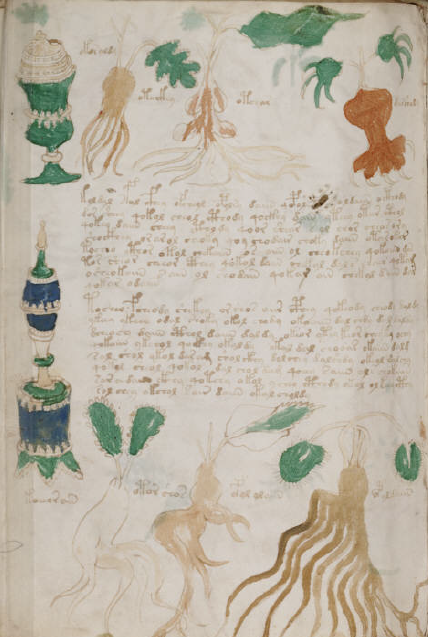
f89r2.1 (@Lc)
[ORG] odory
[ACA] [HIP] ação/processo de ativação (exalação/emanar/“levantar” algo volátil)
[FUN] Inicie o processo de ativação do estágio (especialmente voláteis/aromas/emanação), mantendo a sequência pronta para a etapa de controle seguinte.
f89r2.2 (@Lf)
[ORG] doly
[ACA] conector articulado “do/da” em modo fechado/contido (-ly)
[FUN] Trate a porção como derivada/originária (“do/da”) e mantenha o bloco em modo contido, sem quebrar a estase antes do próximo comando.
f89r2.3 (@Lf)
[ORG] opchosam
[ACA] inspeção técnica (checkpoint visual) + marcador de modo/medida (-am)
[FUN] Faça inspeção imediata: confirme clareza, separação de fases e estabilidade antes de qualquer trasfega/dosagem.
f89r2.4 (@Lf)
[ORG] saloiin.sheol
[ACA]
-
saloiin = reagente salino em estado fixado/assentado (-oiin)
-
sheol = selagem/fecho completo (estado de fechamento)
[FUN] Use sal já assentado/pronto (não fresco) e mantenha o sistema em selagem completa. Não reabra o vaso até surgir um operador explícito de transição.
f89r2.5 (@Lf)
[ORG] opcheor
[ACA] trasfega/verter com controle (decantação/dosagem por bico/funil)
[FUN] Realize vertimento controlado: transfira a fração sem arrastar borra/sedimento e mantendo dosagem precisa.
f89r2.6 (@P0)
[ORG]qokcheody.cheodal.dair.cholkeedy.qokedy.cheyd.cheo.dal.qoair.shey.cphoeedol.deey.qockhey.choldy.daim
[ACA] (estrutura funcional por blocos)
-
qokcheody = trasfega/conduto com modo QO-/QOK- (ancoragem/escopo de ciclo)
-
cheodal = decantação/transferência articulada (“do/da”)
-
dair = licor claro (fração aquosa clarificada)
-
cholkeedy = escorrimento em gotas / gotejamento (separar fase sem agitar)
-
qokedy = slot/âncora operacional ativa (QO-/QOK-)
-
cheyd = ponte relativa (relacionar a porção ao referencial)
-
cheo = porção vertida / saída conduzida
-
dal = origem “do/da” (articulador)
-
qoair = exposição/abertura ao ar (timing/ventilar)
-
shey = selagem ativa (controle)
-
cphoeedol = depósito/porção assentando (formação de fundo) [HIP]
-
deey = ação contínua (“das/dos”; manutenção de fluxo)
-
qockhey = reinjeção/recirculação controlada (QOC-/QOK-)
-
choldy = fração filtrada (passagem pelo meio/óleo ou via instrumental)
-
daim = marcador de condição local/estado de execução ([HIP])
[FUN]
Execute a trasfega em escopo controlado (QO/QOK): leve a porção para decantação e recolha licor claro (DAIR). Faça o licor escorrer em gotas para separar fase sem agitar o fundo. Ancore a porção na origem (“do/da”) e aplique exposição ao ar conforme o protocolo, mantendo a selagem ativa enquanto o depósito se forma. Em seguida, realize reinjeção controlada do filtrado para aumentar saturação/extração sob a condição local indicada (DAIM, pendente de validação).
f89r2.7 (+P0)
[ORG]chos.aiin.cheodal.daiin.chy.chedain.dolchsyckheol.daiin.choy.cheedy.tchodol.chor.choldy.chos.dol.okcheeg
[ACA] (estrutura por blocos)
-
chos = inventário/itens selecionados (conjunto)
-
aiin = estado registrado/fixado (checkpoint)
-
cheodal = trasfega/decantação articulada
-
daiin = estado fixado (família D-)
-
chy = seletor/ponte de alvo (direcionamento curto)
-
chedain = carga “cozida/aquecida” já fixada [HIP]
-
dolchsyckheol = bloco composto: “do/da” + trava/segurança + selo/óleo (montagem fechada) [HIP]
-
daiin = fixar novamente (reforço)
-
choy = encadeamento/continuidade (ponte)
-
cheedy = execução contínua (ação em curso)
-
tchodol = prova de toque / ensaio de ponto (validação)
-
chor = ciclo/rotina operacional (passo recorrente)
-
choldy = filtrado (saída limpa)
-
chos = itens alinhados novamente
-
dol = origem “do/da”
-
okcheeg = macerar/fragmentar/agir mecanicamente [HIP]
[FUN]
Prepare os itens e confirme o estado registrado. Trasfegue e aplique fixação, selecionando o alvo (CHY). Use a carga já estabilizada (a validar em CHEDAIN) sem reabrir o regime térmico indevidamente. Mantenha o encadeamento ativo, execute em continuidade e realize a prova de ponto (ensaio por toque). Repita o ciclo e conduza o filtrado. Alinhe os itens da origem e prossiga para a etapa mecânica final (OKCHEEG, pendente).
f89r2.8 (+P0)
[ORG]toy.daiin.daiin.daiin.ody.qokeey.cheoldy.qody.cheor.s.ain.daiin.oky.cheody.cheoky<$>
[ACA]
-
toy = operador de transferência (verter/transportar)
-
daiin ×3 = fixação reforçada (triple checkpoint)
-
ody = ponte “do/da” (origem)
-
qokeey = reinjeção/continuidade em escopo QO- (ação em curso)
-
cheoldy = filtrado/saída limpa (via instrumental)
-
qody = âncora/slot (QO-)
-
cheor = dosagem por bico/funil (verter controlado)
-
s = conector curto (slot/partícula de ligação) [UNK]
-
ain = fixado (variante curta de estado)
-
daiin = fixar novamente
-
oky = “aqui/agora” (âncora local)
-
cheody = porção conduzida pelo conduto
-
cheoky = executar trasfega no ponto local (âncora)
-
<$> = fecho de bloco
[FUN]
Verta/transfira o conteúdo e aplique fixação tripla para garantir estabilidade. Trabalhe a partir da porção “do/da” (ODY): use o filtrado em reinjeção controlada (QO-) e faça a dosagem por bico/funil. Mantenha a operação ancorada localmente (“aqui”) e execute a trasfega final sem arrastar sedimento. Feche o bloco.
f89r2.9 (@Lc)
[ORG] otoldy
[ACA] [UNK] fechamento de bloco / travamento final (não atestado com estabilidade nesta versão)
[FUN] Feche o bloco operacional e trate a etapa como concluída (pendente de validação formal do termo).
f89r2.10 (@Lf)
[ORG] okol.shol.dy
[ACA]
-
okol = estabilização/assentamento (repouso controlado)
-
shol = banho de óleo / meio oleoso
-
dy = conector “do/da / por meio de” (via instrumental)
[FUN]
Deixe a porção assentar e estabilizar em banho de óleo, operando “por meio” do meio oleoso antes de seguir.
f89r2.11 (@Lf)
[ORG] opcharoiin
[ACA] estado de fixação definitivo (família OPCHARO) em modo assentado (-oiin)
[FUN]
Aplique a fixação final conforme a ordem do procedimento e trate o estado como estabilizado/assentado.
f89r2.12 (@P0)
[ORG]porechol.qoda.qoteol.oldaiin.otol.sheor.shor.ol.daiin.otchol.cheol<->otolfcho.dar.cho.lkeopol.oeeor.or
[ACA] (estrutura por blocos)
-
porechol = recolher material poroso / fração porosa
-
qoda = conector direcional (para/ao destino)
-
qoteol = filtro/pano em modo QOT- (módulo de filtração/rota)
-
oldaiin = já decantado/fixado (estado)
-
otol = fecho de bloco / travamento [HIP]
-
sheor = selagem (controle)
-
shor = ventilação/abrir passagem (operação)
-
ol = destino/ponte (“ao/para/no”)
-
daiin = fixar/assentar
-
otchol = ciclo neutro (passo de estabilização sem ação agressiva)
-
[ALT] cheol<->otolfcho = ambiguidade de token
-
CHEOL = relativo/âncora de porção (ponte) OU
-
OTOLFCHO = bloco composto (ancorar + filtrar + fechamento) [HIP]
-
-
dar = passo operativo (ação)
-
cho = associação/ligação (conector de mistura/união)
-
lkeopol = pó alcalino / cal/pó de base [HIP]
-
oeeor = sequência/continuidade (ponte)
-
or = conector gramatical
[FUN]
Recolha a fração porosa e direcione-a através do módulo de filtração quando já estiver em estado decantado/assentado. Feche o bloco, sele e ventile apenas o necessário. Direcione ao destino fixado e execute o ciclo neutro de estabilização. Em seguida, há ambiguidade (cheol ↔ otolfcho): ou o termo funciona como âncora relativa da porção, ou indica um bloco composto de ancoragem/filtração/fecho. Depois, execute o passo operativo, associe a carga alcalina (a validar em LKEOPOL) e mantenha a sequência para o próximo conector.
f89r2.13 (+P0)
[ORG]daiin.olkey.okeol.okey<->okeeol.qoor.ol.chor.cheky.shol.daiiin.chol.cheol.kol.dam.olcheol.dol.cheol
[ACA]
-
daiin = fixar
-
olkey = ativação local (ponto operacional)
-
okeol = slot/âncora (carga)
-
[ALT] okey<->okeeol = ambiguidade (slot de carga / slot composto)
-
qoor = núcleo nominal (alvo principal) [HIP]
-
ol = destino (“ao/para/no”)
-
chor = ciclo/rotina
-
cheky = controle/checagem (módulo)
-
shol = banho de óleo
-
daiiin = fixação reforçada (variante)
-
chol = parada/estase (interromper agitação)
-
cheol = relativo/âncora (porção referida)
-
kol = núcleo de mistura/colagem (união) [HIP]
-
dam = marcador de modo/medida [UNK] (família ainda instável)
-
olcheol = óleo em infusão / via oleosa (instrumental)
-
dol = origem “do/da”
-
cheol = relativo final
[FUN]
Fixe o estado e ative o ponto de operação local. Carregue o slot (OKEOL/OKEY ↔ OKEEOL) e direcione ao alvo principal. Execute o ciclo com checagem e conduza o processo em banho de óleo. Aplique fixação reforçada, interrompa a agitação para permitir estase, e trate a porção como referida/ancorada. Processe pela via oleosa (olcheol), mantendo o modo/medida (DAM ainda pendente), e registre a origem (DOL) do material associado.
f89r2.14 (+P0)
[ORG]tos.ol.chor.ydaiin.chey.s.oiiin.chckhy.qokeol.okey.okeey.keey.coeky.qokol.okeey.dal.cheeody.ockhy
[ACA]
-
tos = [UNK] (operador inicial do bloco)
-
ol = destino (“ao/para/no”)
-
chor = ciclo/rotina
-
ydaiin = [UNK] (forma sugere “fixação em modo Y-”, mas não validado)
-
chey = relativo/ponte (“que/aquele”)
-
s = conector curto [UNK]
-
oiiin = fixado/registrado (estado)
-
chckhy = controle/checagem reforçada (inspeção intensificada)
-
qokeol / okey / okeey / keey / coeky / qokol / okeey = cadeia de continuidade QO-/OK- (carregar, manter em curso, encadear, estabilizar) (bloco operacional de repetição)
-
dal = origem “do/da”
-
cheeody = ajuste/extração/porção conduzida (derivativo)
-
ockhy = inspeção final (controle)
[FUN]
Direcione o ciclo ao destino e estabeleça o estado fixado (há um marcador pendente em YDAIIN). Relacione a porção e mantenha-a registrada. Execute checagens reforçadas e faça a cadeia de continuidade QO-/OK- sem interrupções: carregar, manter em curso, estabilizar, reencadear e confirmar. Ao final, ajuste a porção derivada da origem e realize inspeção final.
f89r2.15 (+P0)
[ORG]ycheo.keeo.ckho.saiin.okeo.daiin.ockhy.s.ockhey.saiin.sheeky<$>
[ACA]
-
ycheo = [UNK] (âncora de vaso/porção; candidato de entrada)
-
keeo = âncora/recipiente (ponto de vaso)
-
ckho = eixo de filtração/coagem
-
saiin = estado registrado/fixado
-
okeo = referência interna/slot (OK-)
-
daiin = fixar
-
ockhy = inspeção/controle
-
s = conector curto [UNK]
-
ockhey = rotina de controle/checagem (variante)
-
saiin = registrar novamente
-
sheeky = [UNK] (provável selagem/controle final; não está estável)
-
<$> = fecho de bloco
[FUN]
Use a âncora do vaso para governar o eixo de filtração. Assim que o estado estiver registrado, fixe a porção e realize inspeção. Execute a rotina de checagem até confirmar o registro final. Encerrar com o operador final (SHEEKY, ainda pendente) e feche o bloco.
f89r2.16 (@Lc)
[ORG] korain.y
[ACA] núcleo/corpo em estado fixado (-ain) + conector curto y
[FUN] Considere o corpo do material como estabilizado e mantenha o encadeamento (“e/então”) para o próximo item.
f89r2.17 (@Lf)
[ORG] sodar
[ACA] reagente alcalino (soda/álcali)
[FUN] Dose o reagente alcalino conforme o ponto do ciclo (lixívia/extração), sem exceder a condição de estabilidade.
f89r2.18 (@Lf)
[ORG] cheys
[ACA] relativo (“que/aquele(s)”) + marcador de conjunto (-s)
[FUN] Aponte/amarre o procedimento aos itens já tratados; isto funciona como referência, não como novo reagente.
f89r2.19 (@Lf)
[ORG] cheody
[ACA] porção conduzida/trasfegada (conduto)
[FUN] Refere-se à fração que segue pelo conduto; aplique a regra de “não arrastar borra”.
f89r2.20 (@Lf)
[ORG] oforain
[ACA] [UNK] marcador de conclusão/saída (fecho de fluxo)
[FUN] Trate como encerramento do fluxo/saída desta seção (pendente de validação formal do termo).
f89r2.21 (@Lf)
[ORG] okshd.chos
[ACA] vedação/fecho (OKSHD) + inventário de itens (CHOS)
[FUN] Feche e vede o conjunto de itens selecionados. A etapa termina com material selado e contabilizado.
Síntese procedural do trecho (leitura reconstruída)
Este fólio se comporta como um protocolo de bancada com foco em:
inspeção → selagem → sal assentado → trasfega/decantação → gotejamento para separar fase → exposição ao ar controlada → reinjeção do filtrado → ciclos em banho oleoso → checkpoints repetidos (DAIIN/AIIN/SAIIN) → validações (toque/inspeção) → fechamento e inventário final.
<f89r2.1,@Lc> odory
<f89r2.2,@Lf> doly
<f89r2.3,@Lf> opchosam
<f89r2.4,@Lf> saloiin.sheol
<f89r2.5,@Lf> opcheor
<f89r2.6,@P0> <%>qokcheody.cheodal.dair.cholkeedy.qokedy.cheyd.cheo.dal.qoair.shey.cphoeedol.deey.qockhey.choldy.daim
<f89r2.7,+P0> chos.aiin.cheodal.daiin.chy.chedain.dolchsyckheol.daiin.choy.cheedy.tchodol.chor.choldy.chos.dol.okcheeg
<f89r2.8,+P0> toy.daiin.daiin.daiin.ody.qokeey.cheoldy.qody.cheor.s.ain.daiin.oky.cheody.cheoky<$>
<f89r2.9,@Lc> otoldy
<f89r2.10,@Lf> okol.shol.dy
<f89r2.11,@Lf> opcharoiin
<f89r2.12,@P0> <%>porechol.qoda.qoteol.oldaiin.otol.sheor.shor.ol.daiin.otchol.cheol<->otolfcho.dar.cho.lkeopol.oeeor.or
<f89r2.13,+P0> daiin.olkey.okeol.okey<->okeeol.qoor.ol.chor.cheky.shol.daiiin.chol.cheol.kol.dam.olcheol.dol.cheol
<f89r2.14,+P0> tos.ol.chor.ydaiin.chey.s.oiiin.chckhy.qokeol.okey.okeey.keey.coeky.qokol.okeey.dal.cheeody.ockhy
<f89r2.15,+P0> ycheo.keeo.ckho.saiin.okeo.daiin.ockhy.s.ockhey.saiin.sheeky<$>
<f89r2.16,@Lc> korain.y
<f89r2.17,@Lf> sodar
<f89r2.18,@Lf> cheys
<f89r2.19,@Lf> cheody
<f89r2.20,@Lf> oforain
<f89r2.21,@Lf> okshd.chos
ANALYSIS RESULT
f89r2.1 (@Lc)
[ORG] odory
[ACA] [HYP] activation action/process (exhalation/emanation/“raising” something volatile)
[FUN] Initiate the stage’s activation process (especially volatiles/aromas/emanation), keeping the sequence ready for the next control step.
f89r2.2 (@Lf)
[ORG] doly
[ACA] articulated connector “from/of” in closed/contained mode (-ly)
[FUN] Treat the portion as derived/originating (“from/of”) and keep the block in contained mode, without breaking stasis before the next command.
f89r2.3 (@Lf)
[ORG] opchosam
[ACA] technical inspection (visual checkpoint) + mode/measure marker (-am)
[FUN] Perform an immediate inspection: confirm clarity, phase separation, and stability before any decanting/transfer or dosing.
f89r2.4 (@Lf)
[ORG] saloiin.sheol
[ACA]
-
saloiin = saline reagent in a fixed/settled state (-oiin)
-
sheol = sealing/complete closure (closed-state)
[FUN] Use salt already settled/ready (not fresh) and keep the system in complete sealing. Do not reopen the vessel until an explicit transition operator appears.
f89r2.5 (@Lf)
[ORG] opcheor
[ACA] controlled pouring/transfer (decanting/dosing via spout/funnel)
[FUN] Perform a controlled pour: transfer the fraction without dragging lees/sediment, maintaining precise dosing.
f89r2.6 (@P0)
[ORG]qokcheody.cheodal.dair.cholkeedy.qokedy.cheyd.cheo.dal.qoair.shey.cphoeedol.deey.qockhey.choldy.daim
[ACA] (functional structure by blocks)
-
qokcheody = transfer/conduit with QO-/QOK- mode (anchoring/cycle scope)
-
cheodal = decanting/articulated transfer (“from/of”)
-
dair = clear liquor (clarified aqueous fraction)
-
cholkeedy = drip flow / dropwise draining (separate phase without stirring)
-
qokedy = active operational slot/anchor (QO-/QOK-)
-
cheyd = relative bridge (link the portion to the reference)
-
cheo = poured portion / conducted output
-
dal = “from/of” origin (articulator)
-
qoair = exposure/opening to air (timing/ventilation)
-
shey = active sealing (control)
-
cphoeedol = deposit/portion settling (bottom formation) [HYP]
-
deey = continuous action (“of/from”; maintaining flow)
-
qockhey = controlled reinjection/recirculation (QOC-/QOK-)
-
choldy = filtered fraction (passage through medium/oil or via instrument)
-
daim = local-condition/execution-state marker ([HYP])
[FUN]
Execute the transfer within a controlled scope (QO/QOK): bring the portion to decanting and collect clear liquor (DAIR). Let the liquor drain dropwise to separate phases without disturbing the bottom. Anchor the portion to its origin (“from/of”) and apply air exposure per protocol, keeping active sealing while the deposit forms. Then perform controlled reinjection of the filtrate to increase saturation/extraction under the indicated local condition (DAIM, pending validation).
f89r2.7 (+P0)
[ORG]chos.aiin.cheodal.daiin.chy.chedain.dolchsyckheol.daiin.choy.cheedy.tchodol.chor.choldy.chos.dol.okcheeg
[ACA] (block structure)
-
chos = inventory/selected items (set)
-
aiin = recorded/fixed state (checkpoint)
-
cheodal = articulated transfer/decanting
-
daiin = fixed state (D- family)
-
chy = target selector/bridge (short-range direction)
-
chedain = “cooked/heated” load already fixed [HYP]
-
dolchsyckheol = compound block: “from/of” + lock/safety + seal/oil (closed assembly) [HYP]
-
daiin = fix again (reinforcement)
-
choy = chaining/continuity (bridge)
-
cheedy = continuous execution (ongoing action)
-
tchodol = touch test / endpoint test (validation)
-
chor = operational cycle/routine (recurring step)
-
choldy = filtrate (clean output)
-
chos = items aligned again
-
dol = “from/of” origin
-
okcheeg = macerate/fragment/mechanically act [HYP]
[FUN]
Prepare the items and confirm the recorded state. Decant/transfer and apply fixation, selecting the target (CHY). Use the already stabilized load (to be validated under CHEDAIN) without improperly reopening the thermal regime. Keep chaining active, execute continuously, and perform the endpoint test (touch test). Repeat the cycle and conduct the filtrate. Re-align the items from the origin and proceed to the final mechanical step (OKCHEEG, pending).
f89r2.8 (+P0)
[ORG]toy.daiin.daiin.daiin.ody.qokeey.cheoldy.qody.cheor.s.ain.daiin.oky.cheody.cheoky<$>
[ACA]
-
toy = transfer operator (pour/transport)
-
daiin ×3 = reinforced fixation (triple checkpoint)
-
ody = “from/of” bridge (origin)
-
qokeey = reinjection/continuity in QO- scope (ongoing action)
-
cheoldy = filtrate/clean output (via instrument)
-
qody = anchor/slot (QO-)
-
cheor = dosing via spout/funnel (controlled pour)
-
s = short connector (slot/link particle) [UNK]
-
ain = fixed (short state variant)
-
daiin = fix again
-
oky = “here/now” (local anchor)
-
cheody = portion conducted through the conduit
-
cheoky = execute transfer at the local point (anchor)
-
<$> = block closure
[FUN]
Pour/transfer the contents and apply triple fixation to ensure stability. Work from the “from/of” portion (ODY): use the filtrate in controlled reinjection (QO-) and dose via spout/funnel. Keep the operation locally anchored (“here”) and execute the final transfer without dragging sediment. Close the block.
f89r2.9 (@Lc)
[ORG] otoldy
[ACA] [UNK] block closure / final lock (not attested with stability in this version)
[FUN] Close the operational block and treat the step as complete (pending formal validation of the term).
f89r2.10 (@Lf)
[ORG] okol.shol.dy
[ACA]
-
okol = stabilization/settling (controlled rest)
-
shol = oil bath / oily medium
-
dy = “from/of / by means of” connector (instrumental route)
[FUN]
Let the portion settle and stabilize in an oil bath, operating “by means of” the oily medium before proceeding.
f89r2.11 (@Lf)
[ORG] opcharoiin
[ACA] definitive fixation state (OPCHARO family) in settled mode (-oiin)
[FUN]
Apply the final fixation according to the procedure order and treat the state as stabilized/settled.
f89r2.12 (@P0)
[ORG]porechol.qoda.qoteol.oldaiin.otol.sheor.shor.ol.daiin.otchol.cheol<->otolfcho.dar.cho.lkeopol.oeeor.or
[ACA] (block structure)
-
porechol = collect porous material / porous fraction
-
qoda = directional connector (to/toward the destination)
-
qoteol = filter/cloth in QOT- mode (filtration module/route)
-
oldaiin = already decanted/fixed (state)
-
otol = block closure / lock [HYP]
-
sheor = sealing (control)
-
shor = ventilation/open passage (operation)
-
ol = destination/bridge (“to/for/in”)
-
daiin = fix/settle
-
otchol = neutral cycle (stabilization step without aggressive action)
-
[ALT] cheol<->otolfcho = token ambiguity
-
CHEOL = relative/portion anchor (bridge) OR
-
OTOLFCHO = compound block (anchor + filter + closure) [HYP]
-
-
dar = operative step (action)
-
cho = association/linking (mixing/union connector)
-
lkeopol = alkaline powder / lime/base powder [HYP]
-
oeeor = sequence/continuity (bridge)
-
or = grammatical connector
[FUN]
Collect the porous fraction and direct it through the filtration module once it is already in a decanted/settled state. Close the block; seal and ventilate only as needed. Direct to the fixed destination and execute the neutral stabilization cycle. Then there is ambiguity (cheol ↔ otolfcho): either the term functions as a relative anchor of the portion, or it indicates a compound anchoring/filtration/closure block. After that, execute the operative step, associate the alkaline load (to be validated under LKEOPOL), and keep the sequence ready for the next connector.
f89r2.13 (+P0)
[ORG]daiin.olkey.okeol.okey<->okeeol.qoor.ol.chor.cheky.shol.daiiin.chol.cheol.kol.dam.olcheol.dol.cheol
[ACA]
-
daiin = fix
-
olkey = local activation (operational point)
-
okeol = slot/anchor (load)
-
[ALT] okey<->okeeol = ambiguity (load slot / compound slot)
-
qoor = nominal core (primary target) [HYP]
-
ol = destination (“to/for/in”)
-
chor = cycle/routine
-
cheky = control/check (module)
-
shol = oil bath
-
daiiin = reinforced fixation (variant)
-
chol = stop/stasis (halt agitation)
-
cheol = relative/anchor (referred portion)
-
kol = mixing/binding core (union) [HYP]
-
dam = mode/measure marker [UNK] (family still unstable)
-
olcheol = oil infusion / oily route (instrumental)
-
dol = “from/of” origin
-
cheol = final relative
[FUN]
Fix the state and activate the local operating point. Load the slot (OKEOL/OKEY ↔ OKEEOL) and direct it to the primary target. Run the cycle with checking and conduct the process in an oil bath. Apply reinforced fixation, stop agitation to allow stasis, and treat the portion as referred/anchored. Process through the oily route (olcheol), maintaining the mode/measure (DAM still pending), and record the origin (DOL) of the associated material.
f89r2.14 (+P0)
[ORG]tos.ol.chor.ydaiin.chey.s.oiiin.chckhy.qokeol.okey.okeey.keey.coeky.qokol.okeey.dal.cheeody.ockhy
[ACA]
-
tos = [UNK] (block-initial operator)
-
ol = destination (“to/for/in”)
-
chor = cycle/routine
-
ydaiin = [UNK] (form suggests “fixation in Y- mode”, but not validated)
-
chey = relative/bridge (“that/which”)
-
s = short connector [UNK]
-
oiiin = fixed/recorded (state)
-
chckhy = reinforced control/checking (intensified inspection)
-
qokeol / okey / okeey / keey / coeky / qokol / okeey = QO-/OK- continuity chain (load, keep running, chain, stabilize) (repetition operational block)
-
dal = “from/of” origin
-
cheeody = adjustment/extraction/conducted portion (derivative)
-
ockhy = final inspection (control)
[FUN]
Direct the cycle to the destination and establish the fixed state (there is a pending marker in YDAIIN). Relate the portion and keep it recorded. Execute reinforced checks and run the QO-/OK- continuity chain without interruptions: load, keep running, stabilize, re-chain, and confirm. At the end, adjust the portion derived from the origin and perform the final inspection.
f89r2.15 (+P0)
[ORG]ycheo.keeo.ckho.saiin.okeo.daiin.ockhy.s.ockhey.saiin.sheeky<$>
[ACA]
-
ycheo = [UNK] (vessel/portion anchor; candidate input)
-
keeo = anchor/container (vessel point)
-
ckho = filtration/straining axis
-
saiin = recorded/fixed state
-
okeo = internal reference/slot (OK-)
-
daiin = fix
-
ockhy = inspection/control
-
s = short connector [UNK]
-
ockhey = control/checking routine (variant)
-
saiin = record again
-
sheeky = [UNK] (likely final sealing/control; not stable yet)
-
<$> = block closure
[FUN]
Use the vessel anchor to govern the filtration axis. Once the state is recorded, fix the portion and perform an inspection. Execute the checking routine until the final record is confirmed. End with the final operator (SHEEKY, still pending) and close the block.
f89r2.16 (@Lc)
[ORG] korain.y
[ACA] core/body in a fixed state (-ain) + short connector y
[FUN] Treat the material body as stabilized and keep the chaining (“and/then”) to the next item.
f89r2.17 (@Lf)
[ORG] sodar
[ACA] alkaline reagent (soda/alkali)
[FUN] Dose the alkaline reagent according to the cycle point (lye/extraction), without exceeding the stability condition.
f89r2.18 (@Lf)
[ORG] cheys
[ACA] relative (“that/which/those”) + set marker (-s)
[FUN] Point/tie the procedure back to the items already treated; this functions as a reference, not as a new reagent.
f89r2.19 (@Lf)
[ORG] cheody
[ACA] conducted/transferred portion (conduit)
[FUN] Refers to the fraction moving through the conduit; apply the “do not drag lees” rule.
f89r2.20 (@Lf)
[ORG] oforain
[ACA] [UNK] completion/output marker (flow closure)
[FUN] Treat this as the end of the flow/output for this section (pending formal validation of the term).
f89r2.21 (@Lf)
[ORG] okshd.chos
[ACA] sealing/closure (OKSHD) + item inventory (CHOS)
[FUN] Close and seal the set of selected items. The stage ends with material sealed and accounted for.
Procedural synthesis of the passage (reconstructed reading)
This folio behaves like a bench protocol focused on:
inspection → sealing → settled salt → transfer/decanting → dropwise draining to separate phases → controlled air exposure → reinjection of the filtrate → cycles in an oily bath → repeated checkpoints (DAIIN/AIIN/SAIIN) → validations (touch/inspection) → final closure and inventory.