
RESULTADO DE ANÁLISE
Linha f89r2.22
[ORG]kolches.sheol.qokeoefy.sheey.opcheor.opcheol.shody.sholdy<->qokol.chey.oldy.sheodal.ytoldy
[ACA] (segmento principal)
-
KOLCHES = colatura/filtrado (porção já coada)
-
SHEOL = selagem completa (não reabrir sem ordem)
-
QOKEOEFY = reinjeção operacional (Q-ciclo: retornar o filtrado ao ciclo para saturar/repuxar extração)
-
sheey = [FAMÍLIA -SHEEY] (formas com -SHEEY existem; aqui está reduzido → ação/estado ligado a selagem/solidificação em curso, mas sem token “SHEEY” isolado)
-
OPCHEOR = bico/funil/condutor de vertimento controlado
-
opcheol = [ALT]
-
leitura provável por família OPCHEEOL = aplicação de óleo/meio oleoso (há token OPCHEEOL; “OPCHEOL” pode ser abreviação)
-
leitura conservadora = [UNK] (se for outro conector OPCH-)
-
-
SHODY = vedar/fechar hermeticamente (passo de fecho firme)
-
SHOLDY = meio oleoso / banho de óleo (oleum; ponte instrumental)
[ACA] (ramo alternativo após <->)
-
qokol = [FAMÍLIA QOKOL-] (não existe “QOKOL” isolado, mas QOKOLY/QOKOLDY existem e carregam o mesmo papel de Q-ciclo)
-
chey = [FAMÍLIA -CHEY] (não existe “CHEY” isolado; família indica conectores relativos/instrumentais tipo “com que/ao que”)
-
OLDY = óleo (instrumento/meio)
-
sheodal = [FAMÍLIA -SHEODAL] (SHEODAL não aparece isolado; existem KSHEODAL/TSHEODAL etc → “estado/qualificação” ligado à selagem)
-
YTOLDY = base gordurosa/sebo (tallow base) em operação
[FUN]
Trate a colatura/filtrado como porção já separada e mantenha o vaso em selagem total. Em seguida, aplique Q-ciclo: reinjete a fração ao circuito para reforçar extração/saturação. Realize o vertimento controlado via funil/condutor e, muito provavelmente, aplique óleo como meio (se OPCHEOL ≈ OPCHEEOL), encerrando com fecho hermético e regime oleoso.
No ramo alternativo, o texto troca o fechamento oleoso por uma ênfase de “lote em óleo + estado de selagem” e aponta para base de sebo (YTOLDY) como destino funcional do que foi recirculado.
Linha f89r2.23
[ORG]daiin.cheok.okeol.daiin.dal.dair.qokeey.okeol.daiin.ykeody<->okeeeo.ees.cheey.ykeol.cheo.cheky
[ACA] (segmento principal)
-
DAIIN = estado fixado/assentado (família D-; fechamento de fase)
-
CHEOK = vertimento/trasfega controlada (decantar sem borra)
-
OKEOL = âncora de slot (referência interna ao recipiente/compartimento ativo)
-
DAL = “do/da” (genitivo: origem/pertencimento)
-
DAIR = licor claro (fração aquosa clarificada)
-
qokeey = [FAMÍLIA QOK-] (não existe “QOKEEY” isolado; o papel bate com QOKEOEFY/QOKOLDY/QOKEEEY → reinjeção/retorno ao ciclo)
-
ykeody = [UNK] com forte cara de “Y- + KEO/DY” (encadeamento ligado ao slot/retorno), mas sem verbete direto
[ACA] (ramo alternativo após <->)
-
OKEEEO = fixar referência “dentro do recipiente em uso” (executa o próximo termo no mesmo slot)
-
EES = morfema de ligação (“e”/cola gramatical; não é reagente)
-
cheey = [FAMÍLIA -CHEEY] (muitas formas existem; sem token isolado → “ação em curso” de natureza a confirmar pelo contexto local)
-
ykeol = [UNK] (provável “Y- + OKEOL”: encadeamento ancorado no slot)
-
CHEO = vertimento/trasfega controlada
-
CHEKY = cal / cal viva (base alcalina forte)
[FUN]
Fixe o estado (DAIIN), decante/trasfegue (CHEOK) no slot ativo (OKEOL) e volte a fixar. A cadeia “DAL + DAIR” indica que a ação subsequente opera a partir do licor claro (fração aquosa). Em seguida, aparece um Q-ciclo (qokeey): reinjete a fração ao circuito dentro do mesmo recipiente (OKEOL) e torne a fixar.
No ramo alternativo, o texto vira “executar tudo dentro do recipiente em uso” (OKEEEO) e prepara uma ação em curso (cheey) ancorada no slot, finalizando com trasfega (CHEO) e introdução/uso de cal viva (CHEKY) como reagente/base.
Linha f89r2.24
[ORG]yokeeol.cheol.qokeey.qokeol.chey.eeeokor.okeey.key.daiin<->qokeol.cheey.qokeey.saiin.oteos
[ACA] (segmento principal)
-
YOKEEOL = óleo fino / fração leve (trabalhar aquecendo e mexendo)
-
CHEOL = conector relativo/subordinador (“che ’l”; não é matéria)
-
qokeey = [FAMÍLIA QOK-] (Q-ciclo; reinjeção operacional)
-
QOKEOL = reinjeção operacional (token direto; Q-ciclo)
-
chey = [FAMÍLIA -CHEY] (conector relativo/instrumental)
-
EEEOKOR = marca de controle/segmentação (“e a núcleo”; checkpoint)
-
okeey = [ALT] provável OEKEEY (“este ponto / aqui”, em ação contínua) (“OKEEY” isolado não aparece)
-
key = [ALT] provável KEEY (manter continuidade do passo) (token “KEY” isolado não aparece; KEEY aparece)
-
DAIIN = estado fixado
[ACA] (ramo alternativo após <->)
-
QOKEOL = reinjeção (Q-ciclo)
-
cheey = [FAMÍLIA -CHEEY] (ação em curso, forma reduzida)
-
qokeey = [FAMÍLIA QOK-] (Q-ciclo)
-
SAIIN = estado registrado/encerrado (particípio passivo: “em estado”)
-
OTEOS = porções selecionadas (payload do passo)
[FUN]
Trabalhe com óleo fino como veículo e use CHEOL/CHEY como conectores de encadeamento (não como reagentes). A sequência aponta para reinjecção Q-cíclica (qokeey/QOKEOL), seguida de um checkpoint (EEEOKOR) e fixação do estado (DAIIN), mantendo o passo ativo no ponto “aqui” (okeey≈OEKEEY) e por continuidade (key≈KEEY).
No ramo alternativo, o texto reforça o Q-ciclo e fecha em estado registrado (SAIIN), explicitando que o operador deve separar/tratar as porções selecionadas (OTEOS) como resultado controlado do ciclo.
Linha f89r2.25
[ORG]doiin.dal.sheol.s.aiin.qocheey.daiin.qokeeol.qokeody.chol.cheol<->ykeo.qo.qol.cheo.loiiin.daimom
[ACA] (segmento principal)
-
doiin = [ALT] provável DOIN (“ponha em / insira em”) (DOIN existe; “DOIIN” parece forma expandida)
-
DAL = do/da (origem)
-
SHEOL = selagem completa
-
s = [MORFEMA] marcador curto (não há verbete isolado)
-
AIIN = estado fixado/registrado
-
qocheey = [FAMÍLIA QOCHE- + -EY] (QOCHEO existe = trasfega; “-EY” sugere ação em curso → aqui é trasfega operando em regime Q-)
-
DAIIN = estado fixado (D-)
-
QOKEEOL = reinjeção operacional (Q-ciclo)
-
QOKEODY = retorno qualificado do Q-ciclo (derivado “-DY”: produto/saída do retorno ao slot)
-
CHOL = conector instrumental (“com/por meio de ferramenta/condição”)
-
CHEOL = conector relativo/subordinador
[ACA] (ramo alternativo após <->)
-
ykeo = [ALT] provável variação de KEEO (âncora “aqui / no vaso em uso”)
-
QO = porção oleosa (veículo/ajuste de fase; núcleo próprio)
-
qol = [FAMÍLIA QOL-] (porção QOL; existem QOLOL/QOLAL/QOLCHEOL etc)
-
CHEO = trasfega controlada
-
LOIIIN = “no/na” (ponte locativa interna; sem geografia real)
-
daimom = [UNK] (sem verbete; funciona como destino/estado macro do ramo)
[FUN]
Insira a ação no compartimento (“doin”), declare a origem (DAL) e mantenha selagem total (SHEOL) até estabilizar em estado (AIIN/DAIIN). Em seguida, execute uma trasfega em curso sob regime Q- (qocheey) e aplique Q-ciclo (QOKEEOL), registrando a saída do retorno (QOKEODY). Use CHOL/CHEOL como conectores instrumentais/relacionais para não quebrar o fluxo do protocolo.
No ramo alternativo, a instrução é: ancorar “aqui” (ykeo≈KEEO), operar com porção oleosa (QO) + porção QOL (família QOL-), decantar (CHEO) no compartimento indicado (LOIIIN) e encaminhar ao estado/resultado DAIMOM (ainda sem definição canônica).
Linha f89r2.26
[ORG]scheor.sy.sorcheey.dol.cheor.cheea.keeo.qokeey.daiin.ycheas.y<->okeey.keeokechy.cthey.daiin.dy
[ACA] (segmento principal)
-
SCHEOR = bico/funil/condutor (vertimento controlado)
-
sy = [MORFEMA/UNK] (sem verbete; atua como modulador curto)
-
sorcheey = [UNK] (não há verbete; estrutura sugere “SOR + CHEEY” = ligação + ação em curso, mas isso é hipótese)
-
DOL = do/da (articulado; origem)
-
CHEOR = bico/funil/condutor (vertimento controlado)
-
CHEEA = “que tem / possui” (conector relacional)
-
KEEO = âncora do vaso/lote em uso (“aqui”, no compartimento ativo)
-
qokeey = [FAMÍLIA QOK-] (Q-ciclo; reinjeção)
-
DAIIN = estado fixado
-
ycheas = [ALT] provável YCHEAS = Y- (encadeamento) + CHEAS (“as quais / que (plural)”)
-
y = [MORFEMA] encadeamento (não aparece como token isolado no dicionário, mas é operador recorrente no seu sistema)
[ACA] (ramo alternativo após <->)
-
okeey = [ALT] provável OEKEEY (“este ponto/aqui” em curso)
-
KEEOKECHY = conector (o próprio dicionário marca como forma não atestada isolada, mas aceita como ponte)
-
CTHEY = conector de ancoragem/transição (manter transição ativa)
-
DAIIN = estado fixado
-
DY = de/do/da (genitivo)
[FUN]
O texto coloca ênfase em vertimento controlado (SCHEOR/CHEOR) “a partir de” (DOL) com relação explícita ao que o vaso “possui” (CHEEA), tudo ancorado no compartimento ativo (KEEO). Em seguida entra um Q-ciclo (qokeey) e a fixação do estado (DAIIN), com encadeamento plural (ycheas) indicando que o passo se aplica a múltiplos itens/porções.
No ramo alternativo, a instrução vira: mantenha tudo “neste ponto” (okeey≈OEKEEY), conecte com KEEOKECHY/CTHEY, fixe (DAIIN) e marque a origem (DY) antes do próximo salto.
Linha f89r2.27
[ORG]qokol.cheor.okoiin.okeoy.qoeey.cheo.r.cheey.qokeol.cheal.s.aiin<->o.cheol.soiiin.dair.chey.daiin
[ACA] (segmento principal)
-
qokol = [FAMÍLIA QOKOL-] (Q-ciclo; reinjeção)
-
CHEOR = vertimento controlado
-
OKOIIN = âncora de slot + relativo (referência interna ao recipiente ativo)
-
OKEOY = slot de carga (introduzir componente no compartimento ativo)
-
qoeey = [FAMÍLIA Q- + OEEY] (“fecho de bloco / e fechado” em curso, sob regime Q-)
-
CHEO = trasfega/decantação controlada
-
r = [MORFEMA/UNK]
-
cheey = [FAMÍLIA -CHEEY] (ação em curso; forma reduzida)
-
QOKEOL = reinjeção Q-cíclica
-
CHEAL = “ao qual / à qual” (conector de destino)
-
s = [MORFEMA]
-
AIIN = estado registrado/fixado
[ACA] (ramo alternativo após <->)
-
o = [MORFEMA/UNK]
-
CHEOL = conector relativo (subordina/amarra o passo)
-
SOIIIN = “sobre os/sobre as (plural)” (ponte preposicional)
-
DAIR = licor claro (fração aquosa)
-
chey = [FAMÍLIA -CHEY] (conector relativo/instrumental)
-
DAIIN = estado fixado
[FUN]
Reinjete o circuito (qokol) com vertimento controlado (CHEOR), mantendo a referência no slot ativo (OKOIIN) e usando o slot de carga (OKEOY) quando houver introdução de porções. Em seguida, o texto sinaliza um “fecho em curso” sob regime Q- (qoeey), pede trasfega (CHEO), mantém uma ação em curso (cheey) e volta ao Q-ciclo (QOKEOL), direcionando “ao qual” (CHEAL) até fixar estado (AIIN).
No ramo alternativo, a instrução é mais “de lavagem/estabilização”: operar sobre itens plurais (SOIIIN), aplicar/usar licor claro (DAIR) como meio, e então fixar (DAIIN).
Linha f89r2.28
[ORG]o.r.ain.or.ain.ol.daiin.qoaiin.ol.chkaiin.daiin.okar.s.air.yl.dairl<$>
[ACA]
-
o / r / ain / s / yl = [MORFEMAS/UNK] (sem verbete isolado; funcionam como cola/modulação curta)
-
OR = ponte gramatical (artigo elidido + ligação)
-
OL = “ao/para o” (ponte direcional)
-
DAIIN = estado fixado/assentado
-
qoaiin = [FAMÍLIA QO + AIIN] (QO existe = porção oleosa; AIIN existe = estado fixado → aqui é “porção oleosa em estado/fixada”, mas como token colado fica marcado por família)
-
CHKAIIN = checagem/controle registrado (estado validado)
-
OKAR = parâmetro/slot do sistema (alvo definido pelo contexto)
-
AIR = ar/meio/aeração (instrumento)
-
DAIRL = modulador de ajuste (“dar o/a / dar-lhe” como controle/acionamento)
[FUN]
Esta linha é uma linha de amarração e validação: direcione (OL) e fixe (DAIIN), aplique a porção oleosa já em regime de estado (qoaiin por família QO+AIIN), realize a checagem registrada (CHKAIIN), fixe novamente (DAIIN) e amarre o alvo no parâmetro OKAR. Em seguida, use AIR como meio/instrumento e finalize com um ajuste/acionamento (DAIRL). O marcador <$> encerra o bloco.
Bloco de Etiquetas Finais (f89r2.29–f89r2.34)
Essas linhas funcionam como rótulos/âncoras finais: estados, slots ou comandos curtos pós-procedimento. Onde o dicionário não tem verbete, eu marco como [UNK].
f89r2.29
[ORG] okain
[ACA] OKAIN = marcador deíctico “aqui / no slot central” (câmara principal de reação)
[FUN] Ancore a operação no compartimento central do aparato; o próximo passo (se houver) acontece “aqui”, sem trocar de recipiente.
f89r2.30
[ORG] yorain
[ACA] YORAIN = estado encerrado [candidato nominal no dicionário]
[FUN] Trate como estado final/encerrado do sub-bloco, mantendo repouso e observação antes de qualquer novo ciclo.
f89r2.31
[ORG] ofakal
[ACA] OFAKAL = dissolver/solubilizar (ativar solubilização)
[FUN] Execute o passo de dissolução, tornando o composto solúvel/ativo para a etapa seguinte.
f89r2.32
[ORG] otalsy
[ACA] [UNK] (sem verbete OTALSY/OTALSY no v27.47 A; existe família OTAL- ligada a TALOR/tela filtrante, mas “OTALSY” não está canônico)
[FUN] Marque como etiqueta final pendente; por ora, trate como comando/estado curto a ser confirmado por contexto em outras ocorrências.
f89r2.33
[ORG] ytarem
[ACA] [UNK] (sem verbete; não aparece família direta “TAREM” canônica)
[FUN] Marque como etiqueta final pendente; não usar como prova sem validação cruzada em outras linhas.
f89r2.34
[ORG] otolarol
[ACA] OTOLAROL = operador [candidato nominal] (comando procedural ainda sem glossário fechado)
[FUN] Registre como comando final do bloco; ele se comporta como “selo de encerramento/registro” até ser melhor definido por comparação de ocorrências.
Síntese procedural do bloco (o que o trecho “faz”)
Este conjunto é muito coerente como rotina de bancada em recirculação:
-
colatura/filtrado entra selado (SHEOL)
-
aplica-se Q-ciclo repetido (QOKEOEFY / QOKEOL / QOKEEOL / QOKEODY)
-
usa-se vertimento controlado (CHEO/CHEOK + CHEOR/SCHEOR + OPCHEOR)
-
alterna-se meio oleoso (OLDY/SHOLDY/YOKEEOL/QO) com licor claro (DAIR)
-
fecha-se com checagem registrada (CHKAIIN) e um bloco de etiquetas finais
É um “motor de extração por recirculação”, com validação e travas, bem mais próximo de procedimento do que de texto narrativo.
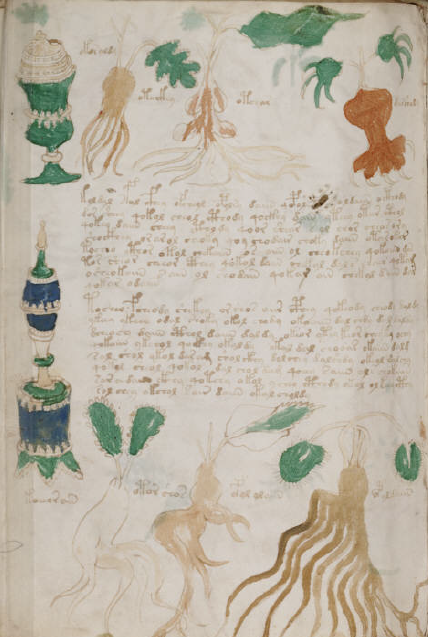
<f89r2.22,@P0> <%>kolches.sheol.qokeoefy.sheey.opcheor.opcheol.shody.sholdy<->qokol.chey.oldy.sheodal.ytoldy
<f89r2.23,+P0> daiin.cheok.okeol.daiin.dal.dair.qokeey.okeol.daiin.ykeody<->okeeeo.ees.cheey.ykeol.cheo.cheky
<f89r2.24,+P0> yokeeol.cheol.qokeey.qokeol.chey.eeeokor.okeey.key.daiin<->qokeol.cheey.qokeey.saiin.oteos
<f89r2.25,+P0> doiin.dal.sheol.s.aiin.qocheey.daiin.qokeeol.qokeody.chol.cheol<->ykeo.qo.qol.cheo.loiiin.daimom
<f89r2.26,+P0> scheor.sy.sorcheey.dol.cheor.cheea.keeo.qokeey.daiin.ycheas.y<->okeey.keeokechy.cthey.daiin.dy
<f89r2.27,+P0> qokol.cheor.okoiin.okeoy.qoeey.cheo.r.cheey.qokeol.cheal.s.aiin<->o.cheol.soiiin.dair.chey.daiin
<f89r2.28,+P0> o.r.ain.or.ain.ol.daiin.qoaiin.ol.chkaiin.daiin.okar.s.air.yl.dairl<$>
<f89r2.29,@Lc> okain
<f89r2.30,+Lc> yorain
<f89r2.31,@Lf> ofakal
<f89r2.32,@Lf> otalsy
<f89r2.33,@Lf> ytarem
<f89r2.34,@Lf> otolarol
ANALYSIS RESULT
Line f89r2.22
[ORG]kolches.sheol.qokeoefy.sheey.opcheor.opcheol.shody.sholdy<->qokol.chey.oldy.sheodal.ytoldy
[ACA] (main segment)
-
KOLCHES = colature/filtrate (portion already filtered)
-
SHEOL = complete sealing (do not reopen without order)
-
QOKEOEFY = operational reinjection (Q-cycle: return the filtrate to the cycle to saturate/pull extraction)
-
sheey = [-SHEEY FAMILY] (forms with -SHEEY exist; here reduced → action/state linked to sealing/solidification in progress, but without isolated “SHEEY” token)
-
OPCHEOR = spout/funnel/conduit for controlled pouring
-
opcheol = [ALT]
-
likely reading by family OPCHEEOL = application of oil/oily medium (token OPCHEEOL exists; “OPCHEOL” may be an abbreviation)
-
conservative reading = [UNK] (if it is another OPCH- connector)
-
-
SHODY = seal/close hermetically (firm closing step)
-
SHOLDY = oily medium / oil bath (oleum; instrumental bridge)
[ACA] (alternative branch after <->)
-
qokol = [QOKOL- FAMILY] (no isolated “QOKOL”, but QOKOLY/QOKOLDY exist and carry the same Q-cycle role)
-
chey = [-CHEY FAMILY] (no isolated “CHEY”; family indicates relative/instrumental connectors like “with which/to which”)
-
OLDY = oil (instrument/medium)
-
sheodal = [-SHEODAL FAMILY] (SHEODAL does not appear isolated; KSHEODAL/TSHEODAL etc. exist → “state/qualification” linked to sealing)
-
YTOLDY = fatty base/tallow (tallow base) in operation
[FUN]
Treat the colature/filtrate as an already separated portion and keep the vessel under total sealing. Then apply the Q-cycle: reinject the fraction into the circuit to reinforce extraction/saturation. Perform controlled pouring via spout/conduit and, very likely, apply oil as the medium (if OPCHEOL ≈ OPCHEEOL), closing with hermetic sealing and an oily regime.
In the alternative branch, the text replaces oily closure with an emphasis on “batch in oil + sealed state” and points to a tallow base (YTOLDY) as the functional destination of what was recirculated.
Line f89r2.23
[ORG]daiin.cheok.okeol.daiin.dal.dair.qokeey.okeol.daiin.ykeody<->okeeeo.ees.cheey.ykeol.cheo.cheky
[ACA] (main segment)
-
DAIIN = fixed/settled state (D-family; phase closure)
-
CHEOK = controlled pouring/transfer (decant without sediment)
-
OKEOL = slot anchor (internal reference to the active vessel/compartment)
-
DAL = “of/from” (genitive: origin/ownership)
-
DAIR = clear liquor (clarified aqueous fraction)
-
qokeey = [QOK- FAMILY] (no isolated “QOKEEY”; role matches QOKEOEFY/QOKOLDY/QOKEEEY → reinjection/return to cycle)
-
ykeody = [UNK] with strong “Y- + KEO/DY” profile (chaining linked to slot/return), but without a direct entry
[ACA] (alternative branch after <->)
-
OKEEEO = fix reference “inside the vessel in use” (execute the next term in the same slot)
-
EES = linking morpheme (“and”/grammatical glue; not a reagent)
-
cheey = [-CHEEY FAMILY] (many forms exist; no isolated token → “action in progress” to be confirmed by local context)
-
ykeol = [UNK] (likely “Y- + OKEOL”: slot-anchored chaining)
-
CHEO = controlled pouring/transfer
-
CHEKY = lime / quicklime (strong alkaline base)
[FUN]
Fix the state (DAIIN), decant/transfer (CHEOK) into the active slot (OKEOL) and fix again. The “DAL + DAIR” chain indicates the subsequent action operates from the clear liquor (aqueous fraction). Then a Q-cycle (qokeey) appears: reinject the fraction into the circuit within the same vessel (OKEOL) and fix again.
In the alternative branch, the text becomes “execute everything inside the vessel in use” (OKEEEO) and prepares an action in progress (cheey) anchored in the slot, ending with transfer (CHEO) and the introduction/use of quicklime (CHEKY) as reagent/base.
Line f89r2.24
[ORG]yokeeol.cheol.qokeey.qokeol.chey.eeeokor.okeey.key.daiin<->qokeol.cheey.qokeey.saiin.oteos
[ACA] (main segment)
-
YOKEEOL = fine oil / light fraction (work by heating and stirring)
-
CHEOL = relative connector/subordinator (“che ’l”; not matter)
-
qokeey = [QOK- FAMILY] (Q-cycle; operational reinjection)
-
QOKEOL = operational reinjection (direct token; Q-cycle)
-
chey = [-CHEY FAMILY] (relative/instrumental connector)
-
EEEOKOR = control/segmentation marker (“and the core”; checkpoint)
-
okeey = [ALT] likely OEKEEY (“this point / here”, in ongoing action) (isolated “OKEEY” does not appear)
-
key = [ALT] likely KEEY (maintain step continuity) (isolated “KEY” does not appear; KEEY does)
-
DAIIN = fixed state
[ACA] (alternative branch after <->)
-
QOKEOL = reinjection (Q-cycle)
-
cheey = [-CHEEY FAMILY] (action in progress, reduced form)
-
qokeey = [QOK- FAMILY] (Q-cycle)
-
SAIIN = recorded/closed state (passive participle: “in state”)
-
OTEOS = selected portions (step payload)
[FUN]
Work with fine oil as the vehicle and use CHEOL/CHEY as chaining connectors (not reagents). The sequence points to Q-cyclic reinjection (qokeey/QOKEOL), followed by a checkpoint (EEEOKOR) and state fixation (DAIIN), keeping the step active at the “here” point (okeey≈OEKEEY) and by continuity (key≈KEEY).
In the alternative branch, the text reinforces the Q-cycle and closes in a recorded state (SAIIN), explicitly stating that the operator must separate/handle the selected portions (OTEOS) as the controlled result of the cycle.
Line f89r2.25
[ORG]doiin.dal.sheol.s.aiin.qocheey.daiin.qokeeol.qokeody.chol.cheol<->ykeo.qo.qol.cheo.loiiin.daimom
[ACA] (main segment)
-
doiin = [ALT] likely DOIN (“put into / insert into”) (DOIN exists; “DOIIN” appears to be an expanded form)
-
DAL = of/from (origin)
-
SHEOL = complete sealing
-
s = [MORPHEME] short marker (no isolated entry)
-
AIIN = fixed/recorded state
-
qocheey = [QOCHE- + -EY FAMILY] (QOCHEO exists = transfer; “-EY” suggests action in progress → here, transfer operating under Q-regime)
-
DAIIN = fixed state (D-)
-
QOKEEOL = operational reinjection (Q-cycle)
-
QOKEODY = qualified return of the Q-cycle (derived “-DY”: product/output of the return to the slot)
-
CHOL = instrumental connector (“with/by means of tool/condition”)
-
CHEOL = relative/subordinate connector
[ACA] (alternative branch after <->)
-
ykeo = [ALT] likely a variation of KEEO (anchor “here / in the vessel in use”)
-
QO = oily portion (vehicle/phase adjustment; own core)
-
qol = [QOL- FAMILY] (QOL portion; QOLOL/QOLAL/QOLCHEOL etc. exist)
-
CHEO = controlled transfer
-
LOIIIN = “in/on” (internal locative bridge; no real geography)
-
daimom = [UNK] (no entry; functions as branch destination/macro-state)
[FUN]
Insert the action into the compartment (“doin”), declare origin (DAL), and maintain total sealing (SHEOL) until stabilizing in state (AIIN/DAIIN). Then execute a transfer in progress under Q-regime (qocheey) and apply the Q-cycle (QOKEEOL), recording the return output (QOKEODY). Use CHOL/CHEOL as instrumental/relational connectors to preserve protocol flow.
In the alternative branch, the instruction is: anchor “here” (ykeo≈KEEO), operate with an oily portion (QO) + QOL portion (QOL-family), decant (CHEO) into the indicated compartment (LOIIIN), and route to the state/result DAIMOM (not yet canonically defined).
Line f89r2.26
[ORG]scheor.sy.sorcheey.dol.cheor.cheea.keeo.qokeey.daiin.ycheas.y<->okeey.keeokechy.cthey.daiin.dy
[ACA] (main segment)
-
SCHEOR = spout/funnel/conduit (controlled pouring)
-
sy = [MORPHEME/UNK] (no entry; acts as a short modifier)
-
sorcheey = [UNK] (no entry; structure suggests “SOR + CHEEY” = linkage + action in progress, but this is a hypothesis)
-
DOL = of/from (articulated; origin)
-
CHEOR = spout/funnel/conduit (controlled pouring)
-
CHEEA = “that has / possesses” (relational connector)
-
KEEO = vessel/batch anchor in use (“here”, in the active compartment)
-
qokeey = [QOK- FAMILY] (Q-cycle; reinjection)
-
DAIIN = fixed state
-
ycheas = [ALT] likely YCHEAS = Y- (chaining) + CHEAS (“which (plural)”)
-
y = [MORPHEME] chaining (does not appear as an isolated token in the dictionary, but is a recurrent operator in your system)
[ACA] (alternative branch after <->)
-
okeey = [ALT] likely OEKEEY (“this point/here” in progress)
-
KEEOKECHY = connector (the dictionary itself marks it as not attested in isolation, but accepts it as a bridge)
-
CTHEY = anchoring/transition connector (keep the transition active)
-
DAIIN = fixed state
-
DY = of/from (genitive)
[FUN]
The text emphasizes controlled pouring (SCHEOR/CHEOR) “from” (DOL), with explicit relation to what the vessel “has” (CHEEA), all anchored in the active compartment (KEEO). Then a Q-cycle (qokeey) follows, fixing the state (DAIIN), with plural chaining (ycheas) indicating the step applies to multiple items/portions.
In the alternative branch, the instruction becomes: keep everything “at this point” (okeey≈OEKEEY), connect with KEEOKECHY/CTHEY, fix (DAIIN), and mark the origin (DY) before the next jump.
Line f89r2.27
[ORG]qokol.cheor.okoiin.okeoy.qoeey.cheo.r.cheey.qokeol.cheal.s.aiin<->o.cheol.soiiin.dair.chey.daiin
[ACA] (main segment)
-
qokol = [QOKOL- FAMILY] (Q-cycle; reinjection)
-
CHEOR = controlled pouring
-
OKOIIN = slot anchor + relative (internal reference to the active vessel)
-
OKEOY = loading slot (introduce component into the active compartment)
-
qoeey = [Q- + OEEY FAMILY] (“block closure / and closed” in progress, under Q-regime)
-
CHEO = controlled transfer/decantation
-
r = [MORPHEME/UNK]
-
cheey = [-CHEEY FAMILY] (action in progress; reduced form)
-
QOKEOL = Q-cyclic reinjection
-
CHEAL = “to which” (destination connector)
-
s = [MORPHEME]
-
AIIN = recorded/fixed state
[ACA] (alternative branch after <->)
-
o = [MORPHEME/UNK]
-
CHEOL = relative connector (subordinates/binds the step)
-
SOIIIN = “over the / over those (plural)” (prepositional bridge)
-
DAIR = clear liquor (aqueous fraction)
-
chey = [-CHEY FAMILY] (relative/instrumental connector)
-
DAIIN = fixed state
[FUN]
Reinject the circuit (qokol) with controlled pouring (CHEOR), keeping the reference in the active slot (OKOIIN) and using the loading slot (OKEOY) when introducing portions. Then the text signals a “closure in progress” under Q-regime (qoeey), calls for transfer (CHEO), maintains an action in progress (cheey), and returns to the Q-cycle (QOKEOL), directing “to which” (CHEAL) until fixing the state (AIIN).
In the alternative branch, the instruction is more “washing/stabilization”: operate over plural items (SOIIIN), apply/use clear liquor (DAIR) as the medium, and then fix (DAIIN).
Line f89r2.28
[ORG]o.r.ain.or.ain.ol.daiin.qoaiin.ol.chkaiin.daiin.okar.s.air.yl.dairl<$>
[ACA]
-
o / r / ain / s / yl = [MORPHEMES/UNK] (no isolated entries; function as glue/short modulation)
-
OR = grammatical bridge (elided article + linkage)
-
OL = “to/for the” (directional bridge)
-
DAIIN = fixed/settled state
-
qoaiin = [QO + AIIN FAMILY] (QO exists = oily portion; AIIN exists = fixed state → here “oily portion in state/fixed”, but as a fused token it is marked by family)
-
CHKAIIN = recorded check/validation (validated state)
-
OKAR = system parameter/slot (target defined by context)
-
AIR = air/medium/aeration (instrument)
-
DAIRL = adjustment modulator (“to give / give to” as control/actuation)
[FUN]
This line is a binding and validation line: direct (OL) and fix (DAIIN), apply the oily portion already under a state regime (qoaiin by QO+AIIN family), perform the recorded check (CHKAIIN), fix again (DAIIN), and bind the target to parameter OKAR. Then use AIR as medium/instrument and finish with an adjustment/actuation (DAIRL). The marker <$> closes the block.
Final Label Block (f89r2.29–f89r2.34)
These lines function as final labels/anchors: states, slots, or short post-procedure commands. Where the dictionary has no entry, I mark it as [UNK].
f89r2.29
[ORG] okain
[ACA] OKAIN = deictic marker “here / at the central slot” (main reaction chamber)
[FUN] Anchor the operation in the central compartment of the apparatus; the next step (if any) happens “here”, without changing vessels.
f89r2.30
[ORG] yorain
[ACA] YORAIN = closed/terminated state [nominal candidate in dictionary]
[FUN] Treat as the final/closed state of the sub-block, maintaining rest and observation before any new cycle.
f89r2.31
[ORG] ofakal
[ACA] OFAKAL = dissolve/solubilize (activate solubilization)
[FUN] Execute the dissolution step, rendering the compound soluble/active for the next stage.
f89r2.32
[ORG] otalsy
[ACA] [UNK] (no OTALSY/OTALSY entry in v27.47 A; OTAL- family exists linked to TALOR/filtering cloth, but “OTALSY” is not canonical)
[FUN] Mark as a pending final label; for now, treat as a short command/state to be confirmed by context in other occurrences.
f89r2.33
[ORG] ytarem
[ACA] [UNK] (no entry; no canonical “TAREM” family appears)
[FUN] Mark as a pending final label; do not use as evidence without cross-validation in other lines.
f89r2.34
[ORG] otolarol
[ACA] OTOLAROL = operator [nominal candidate] (procedural command without a closed glossary yet)
[FUN] Register as the final command of the block; it behaves as a “closure/record seal” until better defined by occurrence comparison.
Procedural synthesis of the block (what the passage “does”)
This set is highly coherent as a recirculating bench routine:
-
colature/filtrate enters sealed (SHEOL)
-
a repeated Q-cycle is applied (QOKEOEFY / QOKEOL / QOKEEOL / QOKEODY)
-
controlled pouring is used (CHEO/CHEOK + CHEOR/SCHEOR + OPCHEOR)
-
the oily medium (OLDY/SHOLDY/YOKEEOL/QO) alternates with clear liquor (DAIR)
-
closure occurs with recorded validation (CHKAIIN) and a block of final labels
It is a “recirculating extraction engine”, with validation and interlocks—far closer to a procedure than to narrative text.