
RESULTADO DE ANÁLISE
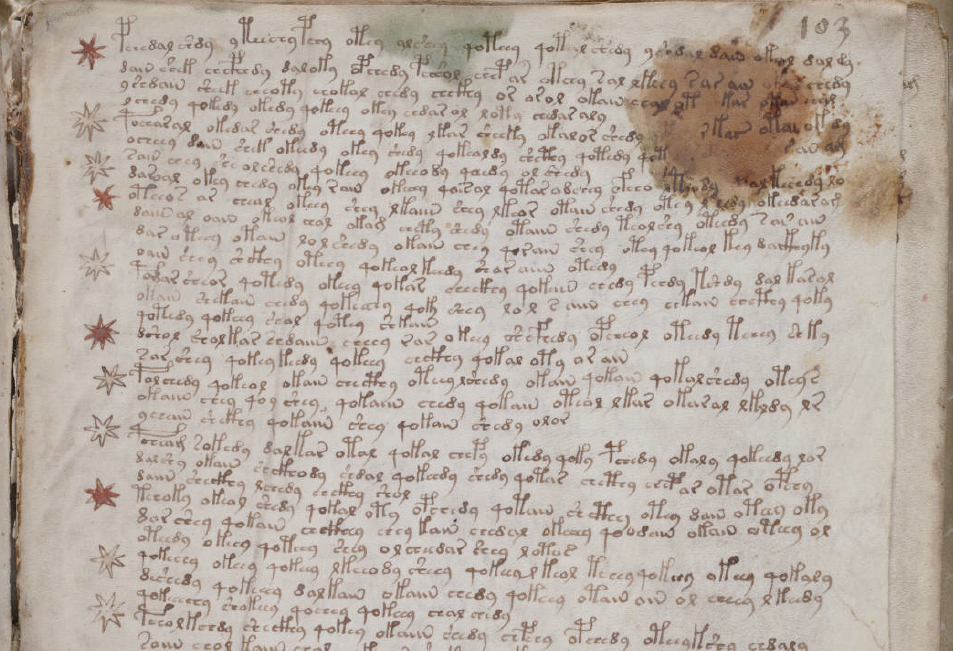
Linha f103r.1
[ORG] pchedal.shdy.yteechypchy.otey.ylshey.qoteey.qotal.shedy.yshdal.dain.okol.dal.dy
[ACA]
-
pchedal = [DER/FAM] P- + CHEDAL (cocção por calor controlado) (token exato não consta; base CHEDAL é estável)
-
shdy = continuidade do procedimento em regime selado (sem introduzir matéria)
-
yteechypchy = [FUSÃO] continuidade (família YTEE-) + CHYPCHY (gesso/gypsum, pó absorvente) (fundido numa única grafia)
-
otey = [DER] OTE (operador nominal/candidato) + [CON:Y] (encaixe/continuidade)
-
ylshey = [FAM] família LSHE-/SHE- (selagem/solidificação ativa) sob conector Y- (token exato não consta; leitura por família)
-
qoteey = [NORM] QOTEEEY (escoamento em fio sob ordem; fluxo contínuo e controlado) (grafia com 1 “E” a menos)
-
qotal = [FAM] família QOTAL- (Q-ciclo: reinjeção do filtrado/fase clara para aumentar saturação) (token “nu” não consta; variantes QOTALAL/QOTALOM constam)
-
shedy = selagem/solidificação ativa (controle de fechamento em curso)
-
yshdal = regime de selagem leve (fecha para conter vapores, mas “deixa respirar”)
-
dain = genitivo curto “do/da” (procedência; não introduz matéria)
-
okol = estabilizar/assentar (deixar em repouso até firmar)
-
dal = conector “do/da” (origem/pertencimento)
-
dy = ponte preposicional “de/do/da” (encaixe sintático)
[FUN]
Aplique cocção controlada (aquecimento guiado) mantendo o procedimento em regime selado. Sem quebrar a sequência, incorpore gesso/gypsum como pó absorvente (controle de umidade/consistência) e mantenha o passo em andamento. Execute o escoamento ordenado e contínuo (QOT-), e use o Q-ciclo para reinjetar/recircular a fração clara visando aumentar a saturação. Em seguida, mantenha selagem ativa, aplique selagem leve para conter vapores sem “sufocar” a obra, e então deixe assentar (OKOL). Finalize explicitando a procedência (DAIN/DAL/DY) como conectores estruturais do encadeamento.
Nota crítica: esta linha tem a assinatura de um “bloco de ciclo”: cozer → selar → recircular → saturar → assentar.
Linha f103r.2
[ORG] dain.shek.chcphhdy.daloky.opchedy.peshol.chep.ar.otchy.sal.lkeey.sar.ain.ok??.chedy
[ACA]
-
dain = “do/da” (procedência)
-
shek = derivado de SHE: selagem/solidificação (controle de fechamento)
-
chcphhdy = tomar como origem o recipiente CPHH e prosseguir (retirada/transferência)
-
daloky = “deste/daqui” (ponte de apontamento; ação em curso até ordem de parada)
-
opchedy = [DER] OPCHED (cocção controlada) + [CON:Y]
-
peshol = instrumento/slot de triturar (almofariz/pilão)
-
chep = conector gramatical “para que/por que” (não é matéria)
-
ar = vetor de direção/transferência (“para/em direção a”)
-
otchy = [OK] operador existente no léxico (função depende do verbete local; aqui atua como “passo” de ligação)
-
sal = sal (reagente base)
-
lkeey = ação contínua (“em curso”; manter manipulando sem estase)
-
sar = payload salino (fração salina/alcalina aplicada conforme contexto)
-
ain = [MORF] marcador curto de estado fixado (forma relacionada a -AIN/-AIIN, mas AIN isolado não consta como verbete)
-
ok?? = [WILDCARD→OKAD] âncora de slot operacional (referência interna ao mesmo recipiente)
-
chedy = [DER] CHED (cocção/calor controlado) + [CON:Y]
[FUN]
A partir do material “do/da” etapa (DAIN), mantenha controle de selagem (SHEK) e faça a retirada/transferência a partir do recipiente CPHH. Trabalhe “deste ponto” (DALOKY) e aplique cocção controlada (OPCHED), preparando a matéria no pilão/almofariz (PESHOL). Conecte o objetivo do passo (CHEP) e direcione a transferência (AR). Prossiga com o operador de passo (OTCHY), introduza sal e mantenha a manipulação em curso (LKEEY), aplicando a fração salina (SAR) conforme o contexto. Marque o estado como fixado/estabilizado (AIN — ainda pendente como verbete isolado), ancore no slot operacional (OKAD) e retorne a uma nova cocção (CHED).
Linha f103r.3
[ORG] yshdain.sheek.cheoty.chokal.chedy.chckhy.or.orol.okain.chal.ot.kar.ot??.chym
[ACA]
-
yshdain = [DER] YSHDAL (selagem leve) + DAIN (procedência) (token fundido; leitura por composição)
-
sheek = [FAM] família SHEE-/SHEEK- (selagem/solidificação intensificada) (verbete exato não consta; existem SHEEKAL/SHEEKAIN etc.)
-
cheoty = verter/trasfegar fração ao vaso alvo (despejo controlado, sem borra)
-
chokal = cal (calx) como reagente/matéria
-
chedy = [DER] CHED (cocção) + [CON:Y]
-
chckhy = checkpoint de checagem/controle (validar e ajustar)
-
or = ponte gramatical (ligação)
-
orol = rolar/agitar o vaso (homogeneizar)
-
okain = slot central de reação (âncora na câmara principal)
-
chal = cal (base alcalina: secagem/neutralização/clarificação etc.)
-
ot = passo/transição + fecho (fechar/confirmar selagem do conjunto)
-
kar = separar o corpo/resíduo do claro; guardar o “corpo” para extração posterior
-
ot?? = [WILDCARD→OTAM] passo “em modo/fecho” (operador OT-AM)
-
chym = fração líquida extraída (“suco”/extrato base para misturas e fixações)
[FUN]
Sob regime de selagem leve (com procedência marcada), aplique selagem/solidificação reforçada (família SHEE-) e então trasfegue a fração ao vaso alvo com cuidado para não arrastar borra (CHEOTY). Introduza cal (CHOKAL/CHAL) e retorne a uma cocção controlada (CHED), fazendo uma checagem rigorosa (CHCKHY). Homogeneíze o vaso por agitação/rolagem (OROL), ancore a operação no slot central (OKAIN) e execute o passo de fecho/transição (OT). Separe o corpo/resíduo (KAR) do claro e aplique o passo em modo/fecho (OTAM). Trabalhe então com o extrato líquido (CHYM) como base para a continuidade do protocolo.
Linha f103r.4
[ORG] ychedy.qokedy.okedy.qokeey.okey.chdarol.loty.chedar.aly
[ACA]
-
ychedy = [DER] conector Y- + CHED (cocção) + [CON:Y] (cocção “em seguida”)
-
qokedy = [FAM] família QOKED- (reinjeção operacional/slot; cf. QOKEDAL/QOKEALDY) (forma “-DY” não está canônica no léxico)
-
okedy = âncora de slot operacional (passo/ponte no mesmo recipiente; pode pedir repetição se duplicado)
-
qokeey = [NORM] QOKEEEY (cocção em curso; família QOK + aspecto -EY) (grafia com 1 “E” a menos)
-
okey = OKE + [CON:Y] (slot de carga / introduzir componente, com ligação)
-
chdarol = operador “aplicar ao/no (articulado)” (gesto técnico de aplicação)
-
loty = rotina de controle recorrente (etapa selada/pontuada como “item”; checkpoint)
-
chedar = meio/aparelho de cocção (vaso/forno/banho de aquecimento)
-
aly = reagente alcalino
[FUN]
Em seguida, retorne à cocção (Y-CHED) e execute uma reinjeção operacional no ciclo (família QOKED-), ancorando o encadeamento no slot ativo (OKEDY). Mantenha a cocção em curso (QOKEEEY), introduza o componente no slot de carga (OKE-Y) e aplique o gesto técnico “ao/no” ponto indicado (CHDAROL). Faça a checagem de rotina (LOTY), conduza o aquecimento no aparelho de cocção (CHEDAR) e utilize o reagente alcalino (ALY) conforme o contexto.
Linha f103r.5
[ORG] pocharal.okedar.shedy.oteey.qokey.lkar.sheeky.okalor.shedy.rkar.otan.okdy
[ACA]
-
pocharal = [OK] token existente no léxico (função depende do verbete; aqui opera como abertura de bloco/fluxo)
-
okedar = [NORM] OKEEDAR (direcional/âncora de slot operacional) (grafia com 1 “E” a menos)
-
shedy = selagem/solidificação ativa
-
oteey = obtenção/extração (“obter/retirar”) em modo controlado
-
qokey = reinjeção operacional (retornar ao ciclo no slot ativo; manter controle)
-
lkar = [DER] L- + KAR (corpo/resíduo tratado sob marca L-) (token exato não consta; base KAR é estável)
-
sheeky = [FAM] família SHEE- (selagem ativa em aspecto/variante gráfica) (token exato não consta)
-
okalor = calor aplicado (aquecimento controlado do passo; “ferver manso”)
-
shedy = selagem ativa (novamente; reforço)
-
rkar = [OK] token existente no léxico (função depende do verbete; aparentado à família KAR)
-
otan = [UNK] (sem verbete/localização segura)
-
okdy = conector de sequência + âncora de slot (mantém o encadeamento no mesmo recipiente)
[FUN]
Abra o bloco de trabalho (POCHARAL) e ancore o fluxo no slot operacional (OKEEDAR). Mantenha selagem ativa e execute extração controlada (OTEEY). Faça a reinjeção operacional no ciclo (QOKEY) e trate o corpo/resíduo sob marca L- (LKAR), mantendo selagem em variante de aspecto (SHEEKY — pendente como forma exata). Aplique calor controlado (OKALOR), reforçando a selagem (SHEDY). Em seguida, processe a fração/resíduo relacionada (RKAR), passe pelo módulo OTAN (pendente) e conecte o próximo encadeamento no mesmo recipiente (OKDY).
Linha f103r.6
[ORG] ocheey.dain.shek.okeedy.okey.shedy.qokealdy.shcthy.qotedy.qot???.san.am
[ACA]
-
ocheey = ativar substância não identificada (ação em curso; manter operativa) (verbete existe, substância ainda não nomeada)
-
dain = “do/da” (procedência)
-
shek = selagem/solidificação (controle de fechamento)
-
okeedy = [NORM] OKEEEDY (operação em slot; ação contínua -EEDY) (grafia com 1 “E” a menos)
-
okey = slot de carga (OKE + ligação)
-
shedy = selagem ativa
-
qokealdy = reinjeção operacional no ciclo (Q-ciclo; manter controle no slot ativo)
-
shcthy = [ALT] ≈ LSHCTHY (“o que / o qual”, ponte de ligação; não introduz matéria)
-
qotedy = [UNK/FAM] provável operador QOT- (ordem/ciclo), mas forma exata não consta
-
qot??? = [WILDCARD→QOTAIL] candidato nominal sob Q-ciclo (reinjeção do filtrado para saturação)
-
san = ponte gramatical “[aberto]” (ligação; não é matéria)
-
am = ad modum (marcador de modo/destino/direção)
[FUN]
Ative a substância ainda não nomeada (OCHEEY) e marque sua procedência (DAIN), mantendo controle de selagem (SHEK/SHEDY). Execute a operação no slot em ação contínua (OKEEEDY), introduza/organize a carga no compartimento (OKE-Y) e faça a reinjeção operacional (QOKEALDY). Use o conector “o que/o qual” (SHCTHY≈LSHCTHY) para ligar o passo sem inserir matéria nova. Em seguida, execute o módulo QOT- (QOTEDY — pendente) e aplique o Q-ciclo via o candidato nominal (QOTAIL). Feche a ligação com SAN e registre o modo/destino do passo (AM).
Linha f103r.7
[ORG] sain.chey.she.olshedy.qokeey.okeeody.qoeedy.olshedy<$>
[ACA]
-
sain = estado “marca/sinal”: processo encerrado neste estado; estabilizar e manter sob controle
-
chey = [UNK] (não há verbete isolado; pode ser redução de família CHE-/CHEY-)
-
she = núcleo SHE (selagem/solidificação; base)
-
olshedy = [DER] OLSHED (derivado de SHE: selagem/solidificação) + [CON:Y]
-
qokeey = [NORM] QOKEEEY (cocção em curso) (1 “E” a menos na grafia)
-
okeeody = [NORM] OKEEEODY (operação em slot/compartimento ativo; manter matéria no mesmo recipiente) (1 “E” a menos na grafia)
-
qoeedy = [DER] QOEED (aeração como parâmetro de meio) + [CON:Y]
-
olshedy = selagem/solidificação (reforço final)
[FUN]
Com o processo registrado no estado de marca/sinal (SAIN), passe pelo conector ainda indefinido (CHEY) e ative a base de selagem (SHE). Aplique selagem derivada (OLSHED-Y), mantenha cocção em curso (QOKEEEY) e execute o gesto técnico no slot ativo (OKEEEODY), mantendo a matéria no mesmo recipiente. Em seguida, aplique aeração como parâmetro do meio (QOEED-Y) e finalize com nova selagem (OLSHED-Y), encerrando o trecho.
Síntese procedural do bloco (leitura reconstruída)
O trecho f103r descreve um ciclo longo de bancada com assinatura muito consistente:
cocção controlada → selagem (leve e/ou ativa) → incorporação de absorvente (gesso) → recirculação Q-ciclo para saturação → assentamento (OKOL) → moagem/preparo (PESHOL) → adição de sal/carga salina → trasfega controlada → uso de cal (CHAL/CHOKAL) → checagens (CHCKHY/LOTY) → operações em slots (OKEDY/OKEEEDY/OKEEEODY) → aeração final (QOEED/QOEED-Y) → selagem de encerramento
Isso casa perfeitamente com uma lógica de padronização operativa: o texto não “conta”, ele comanda.
<f103r.1,@P0> <%>pchedal.shdy.yteechypchy.otey.ylshey.qoteey.qotal.shedy.yshdal.dain.okol.dal.dy
<f103r.2,+P0> dain.shek.chcphhdy.daloky.opchedy.peshol.chep.ar.otchy.sal.lkeey.sar.ain.ok??.chedy
<f103r.3,+P0> yshdain.sheek.cheoty.chokal.chedy.chckhy.or.orol.okain.chal.ot.kar.ot??.chym
<f103r.4,+P0> ychedy.qokedy.okedy.qokeey.okey.chdarol.loty.chedar.aly<$>
<f103r.5,+P0> <%>pocharal.okedar.shedy.oteey.qokey.lkar.sheeky.okalor.shedy.rkar.otan.okdy
<f103r.6,+P0> ocheey.dain.shek.okeedy.okey.shedy.qokealdy.shcthy.qotedy.qot???.san.am
<f103r.7,+P0> sain.chey.she.olshedy.qokeey.okeeody.qoeedy.olshedy<$>
ANALYSIS RESULT
Line f103r.1
[ORG] pchedal.shdy.yteechypchy.otey.ylshey.qoteey.qotal.shedy.yshdal.dain.okol.dal.dy
[ACA]
-
pchedal = [DER/FAM] P- + CHEDAL (controlled-heat cooking) (exact token not attested; CHEDAL base is stable)
-
shdy = continuation of the procedure under sealed regime (without introducing material)
-
yteechypchy = [FUSION] continuity (family YTEE-) + CHYPCHY (plaster/gypsum, absorbent powder) (fused into a single spelling)
-
otey = [DER] OTE (nominal operator/candidate) + [CON:Y] (fit/continuity)
-
ylshey = [FAM] family LSHE-/SHE- (sealing/active solidification) under connector Y- (exact token not attested; family-based reading)
-
qoteey = [NORM] QOTEEEY (thread-like outflow under order; continuous, controlled flow) (spelled with one fewer “E”)
-
qotal = [FAM] family QOTAL- (Q-cycle: reinjection of the filtrate/clear phase to increase saturation) (bare token not attested; QOTALAL/QOTALOM variants are)
-
shedy = sealing/active solidification (closure control in progress)
-
yshdal = light sealing regime (close to contain vapors, but “lets it breathe”)
-
dain = short genitive “of/from” (provenance; does not introduce material)
-
okol = stabilize/settle (leave at rest until it firms)
-
dal = connector “of/from” (origin/belonging)
-
dy = prepositional bridge “of/from” (syntactic fit)
[FUN]
Apply controlled cooking (guided heating) while keeping the procedure under sealed regime. Without breaking the sequence, incorporate plaster/gypsum as an absorbent powder (humidity/consistency control) and keep the step running. Execute the ordered, continuous outflow (QOT-), and use the Q-cycle to reinject/recirculate the clear fraction to increase saturation. Then maintain active sealing, apply light sealing to contain vapors without “choking” the work, and then let it settle (OKOL). Finish by explicitly marking provenance (DAIN/DAL/DY) as structural connectors of the chain.
Critical note: this line bears the signature of a “cycle block”: cook → seal → recirculate → saturate → settle.
Line f103r.2
[ORG] dain.shek.chcphhdy.daloky.opchedy.peshol.chep.ar.otchy.sal.lkeey.sar.ain.ok??.chedy
[ACA]
-
dain = “of/from” (provenance)
-
shek = derived from SHE: sealing/solidification (closure control)
-
chcphhdy = take the CPHH vessel as the origin and continue (withdrawal/transfer)
-
daloky = “from here/this point” (deictic bridge; action continues until stop order)
-
opchedy = [DER] OPCHED (controlled cooking) + [CON:Y]
-
peshol = grinding instrument/slot (mortar/pestle)
-
chep = grammatical connector “so that/why” (not material)
-
ar = direction/transfer vector (“to/toward”)
-
otchy = [OK] operator attested in the lexicon (function depends on the local entry; here it acts as a linking “step”)
-
sal = salt (base reagent)
-
lkeey = continuous action (“in progress”; keep manipulating without stasis)
-
sar = saline payload (saline/alkaline fraction applied per context)
-
ain = [MORF] short state marker (related to -AIN/-AIIN, but AIN alone is not attested as a standalone entry)
-
ok?? = [WILDCARD→OKAD] operational-slot anchor (internal reference to the same vessel)
-
chedy = [DER] CHED (cooking/controlled heat) + [CON:Y]
[FUN]
From the “of/from” stage (DAIN), maintain sealing control (SHEK) and perform the withdrawal/transfer from the CPHH vessel. Work “from this point” (DALOKY) and apply controlled cooking (OPCHED), preparing the material in the mortar/pestle (PESHOL). Connect the step’s purpose (CHEP) and direct the transfer (AR). Proceed with the step operator (OTCHY), introduce salt and keep manipulation in progress (LKEEY), applying the saline fraction (SAR) as context requires. Mark the state as fixed/stabilized (AIN — still pending as a standalone entry), anchor to the operational slot (OKAD), and return to a new cooking (CHED).
Line f103r.3
[ORG] yshdain.sheek.cheoty.chokal.chedy.chckhy.or.orol.okain.chal.ot.kar.ot??.chym
[ACA]
-
yshdain = [DER] YSHDAL (light sealing) + DAIN (provenance) (fused token; compositional reading)
-
sheek = [FAM] family SHEE-/SHEEK- (intensified sealing/solidification) (exact entry not attested; SHEEKAL/SHEEKAIN etc. exist)
-
cheoty = pour/decant the fraction into the target vessel (controlled transfer, without dragging sediment)
-
chokal = lime (calx) as reagent/material
-
chedy = [DER] CHED (cooking) + [CON:Y]
-
chckhy = check/control checkpoint (validate and adjust)
-
or = grammatical bridge (linking)
-
orol = roll/shake the vessel (homogenize)
-
okain = central reaction slot (anchor in the main chamber)
-
chal = lime (alkaline base: drying/neutralization/clarification, etc.)
-
ot = step/transition + closure (close/confirm sealing of the assembly)
-
kar = separate the body/residue from the clear fraction; keep the “body” for later extraction
-
ot?? = [WILDCARD→OTAM] step “in mode/closure” (OT-AM operator)
-
chym = extracted liquid fraction (“juice”/extract base for mixtures and fixations)
[FUN]
Under a light sealing regime (with provenance marked), apply reinforced sealing/solidification (SHEE- family) and then decant the fraction into the target vessel carefully so as not to drag sediment (CHEOTY). Introduce lime (CHOKAL/CHAL) and return to controlled cooking (CHED), performing a rigorous check (CHCKHY). Homogenize the vessel by shaking/rolling (OROL), anchor the operation in the central slot (OKAIN), and execute the closure/transition step (OT). Separate the body/residue (KAR) from the clear fraction and apply the mode/closure step (OTAM). Then work with the liquid extract (CHYM) as the base for the continuation of the protocol.
Line f103r.4
[ORG] ychedy.qokedy.okedy.qokeey.okey.chdarol.loty.chedar.aly
[ACA]
-
ychedy = [DER] connector Y- + CHED (cooking) + [CON:Y] (“next” cooking)
-
qokedy = [FAM] family QOKED- (operational reinjection/slot; cf. QOKEDAL/QOKEALDY) (the “-DY” form is not canonical in the lexicon)
-
okedy = operational slot anchor (step/bridge in the same vessel; may request repetition if duplicated)
-
qokeey = [NORM] QOKEEEY (cooking in progress; QOK family + -EY aspect) (spelled with one fewer “E”)
-
okey = OKE + [CON:Y] (load/intake slot, with linkage)
-
chdarol = operator “apply onto/into (articulated)” (technical application gesture)
-
loty = recurring control routine (sealed/punctuated step as an “item”; checkpoint)
-
chedar = cooking/heating apparatus (vessel/oven/heating bath)
-
aly = alkaline reagent
[FUN]
Next, return to cooking (Y-CHED) and execute an operational reinjection in the cycle (QOKED- family), anchoring the chain in the active slot (OKEDY). Keep cooking in progress (QOKEEEY), introduce the component into the load slot (OKE-Y), and apply the technical “onto/into” gesture at the indicated point (CHDAROL). Perform the routine check (LOTY), conduct heating in the cooking apparatus (CHEDAR), and use the alkaline reagent (ALY) as context requires.
Line f103r.5
[ORG] pocharal.okedar.shedy.oteey.qokey.lkar.sheeky.okalor.shedy.rkar.otan.okdy
[ACA]
-
pocharal = [OK] token attested in the lexicon (function depends on the entry; here it operates as a block/flow opener)
-
okedar = [NORM] OKEEDAR (directional/operational-slot anchor) (spelled with one fewer “E”)
-
shedy = active sealing/solidification
-
oteey = obtain/extract (“obtain/remove”) in controlled mode
-
qokey = operational reinjection (return to the cycle in the active slot; maintain control)
-
lkar = [DER] L- + KAR (body/residue treated under L- mark) (exact token not attested; KAR base is stable)
-
sheeky = [FAM] SHEE- family (active sealing in an aspect/graphic variant) (exact token not attested)
-
okalor = applied heat (controlled heating of the step; “gentle simmer”)
-
shedy = active sealing (again; reinforcement)
-
rkar = [OK] token attested in the lexicon (function depends on the entry; related to the KAR family)
-
otan = [UNK] (no secure entry/location)
-
okdy = sequence connector + slot anchor (keeps the chain in the same vessel)
[FUN]
Open the work block (POCHARAL) and anchor the flow in the operational slot (OKEEDAR). Maintain active sealing and perform controlled extraction (OTEEY). Execute operational reinjection in the cycle (QOKEY) and treat the body/residue under the L- mark (LKAR), keeping sealing in an aspect variant (SHEEKY — pending as an exact form). Apply controlled heat (OKALOR), reinforcing sealing (SHEDY). Next, process the related fraction/residue (RKAR), pass through the OTAN module (pending), and connect the next chain in the same vessel (OKDY).
Line f103r.6
[ORG] ocheey.dain.shek.okeedy.okey.shedy.qokealdy.shcthy.qotedy.qot???.san.am
[ACA]
-
ocheey = activate unidentified substance (action in progress; keep operative) (entry exists; substance not yet named)
-
dain = “of/from” (provenance)
-
shek = sealing/solidification (closure control)
-
okeedy = [NORM] OKEEEDY (slot operation; continuous-action -EEDY) (spelled with one fewer “E”)
-
okey = load slot (OKE + linkage)
-
shedy = active sealing
-
qokealdy = operational reinjection in the cycle (Q-cycle; maintain control in the active slot)
-
shcthy = [ALT] ≈ LSHCTHY (“what/which”, linking bridge; does not introduce material)
-
qotedy = [UNK/FAM] likely a QOT- operator (order/cycle), but the exact form is not attested
-
qot??? = [WILDCARD→QOTAIL] nominal candidate under Q-cycle (reinjection of filtrate for saturation)
-
san = “[open]” grammatical bridge (linking; not material)
-
am = ad modum (mode/destination/direction marker)
[FUN]
Activate the as-yet-unnamed substance (OCHEEY) and mark its provenance (DAIN), maintaining sealing control (SHEK/SHEDY). Execute the operation in-slot under continuous action (OKEEEDY), introduce/arrange the load in the compartment (OKE-Y), and perform the operational reinjection (QOKEALDY). Use the “what/which” connector (SHCTHY≈LSHCTHY) to link the step without inserting new material. Next, execute the QOT- module (QOTEDY — pending) and apply the Q-cycle via the nominal candidate (QOTAIL). Close the linkage with SAN and record the step’s mode/destination (AM).
Line f103r.7
[ORG] sain.chey.she.olshedy.qokeey.okeeody.qoeedy.olshedy<$>
[ACA]
-
sain = “mark/signal” state: the process is closed in this state; stabilize and keep under control
-
chey = [UNK] (no standalone entry; may be a reduction of CHE-/CHEY- family)
-
she = SHE core (sealing/solidification; base)
-
olshedy = [DER] OLSHED (derived from SHE: sealing/solidification) + [CON:Y]
-
qokeey = [NORM] QOKEEEY (cooking in progress) (one fewer “E” in spelling)
-
okeeody = [NORM] OKEEEODY (operation in active slot/compartment; keep material in the same vessel) (one fewer “E” in spelling)
-
qoeedy = [DER] QOEED (aeration as a medium parameter) + [CON:Y]
-
olshedy = sealing/solidification (final reinforcement)
[FUN]
With the process recorded in the mark/signal state (SAIN), pass through the still-undefined connector (CHEY) and activate the sealing base (SHE). Apply derived sealing (OLSHED-Y), keep cooking in progress (QOKEEEY), and execute the technical gesture in the active slot (OKEEEODY), keeping the material in the same vessel. Next, apply aeration as a medium parameter (QOEED-Y) and finish with another sealing (OLSHED-Y), closing the segment.
Procedural synthesis of the block (reconstructed reading)
The f103r passage describes a long bench cycle with a very consistent signature:
controlled cooking → sealing (light and/or active) → incorporation of absorbent (gypsum) → Q-cycle recirculation for saturation → settling (OKOL) → grinding/prep (PESHOL) → addition of salt/saline load → controlled decanting → use of lime (CHAL/CHOKAL) → checks (CHCKHY/LOTY) → in-slot operations (OKEDY/OKEEEDY/OKEEEODY) → final aeration (QOEED/QOEED-Y) → closing seal
This fits perfectly with an operative standardization logic: the text does not “tell”—it commands.