
RESULTADO DE ANÁLISE
Linha f36v.5 (L5)
[ORG] tchor.ckhoiin.daiin.cphchar
[ACA]
-
tchor = prova/toque/ensaio (teste de ponto; instrumento/meio de prova)
-
ckhoiin = fração filtrada e estabilizada (filtrado assentado; pronto para uso)
-
daiin = estado fixado/assentado (família D-)
-
cphchar = vaso/recipiente de contenção (família CPH + “vaso”)
[FUN]
Faça a prova por toque/ensaio de ponto na fração já filtrada e estabilizada. Em seguida, mantenha o conteúdo em repouso/assentamento fixo dentro do vaso de processo, para que a leitura do “ponto” seja confiável antes do próximo passo.
Linha f36v.6 (L6)
[ORG] daiin.cthor.daiin.dal.dys
[ACA]
-
daiin = estado fixado/assentado
-
cthor = [VAR:CHTOR] peça/nó/módulo ligado a junção ou regime técnico (variante gráfica; não canônica como “CTHOR”)
-
daiin = estado fixado/assentado (reforço/segunda fixação)
-
dal = ponte preposicional “do/da” (contração)
-
dys = ponte plural “dos/das” (há ruído de classificação no léxico; tratar como conector)
[FUN]
Com o sistema em estado assentado, trate o elemento CTHOR (variante do núcleo CHTOR) como ponto/módulo ativo e fixe novamente a condição (segunda confirmação de estase). Em seguida, aplique a regência “do/da … dos/das …” como encaixe de origem/pertencimento para amarrar o próximo bloco ao que foi definido aqui (sem introduzir matéria nova por esse conector).
Linha f36v.7 (L7)
[ORG] qoky.keol.okchor.os.cho.shan
[ACA]
-
qoky = ponte genitiva curta + função de reinjeção operacional (“retorne ao ciclo / reinjete no fluxo”, dependendo do contexto)
-
keol = conector relacional (“qui ’l” hip.; encaixe sintático)
-
okchor = [VAR:CHOKCHOR] modo cíclico / repetição controlada (variante sem “CH” inicial)
-
os = base sólida (cinza de osso / adsorvente/suporte alcalino por calcinação)
-
cho = ponte “com”
-
shan = escuma/espuma (fração superficial)
[FUN]
Reative o ciclo por reinjeção/retorno operacional e encaixe a sequência com o conector relacional. Execute em modo cíclico (repetição controlada) e aplique OS (cinza de osso como base/adsorvente) com foco na escuma superficial: o alvo aqui é tratar/retirar/estabilizar a fração leve do topo antes de seguir.
Linha f36v.8 (L8)
[ORG] ykshy.ytchy.dol.ytydy.yky
[ACA]
-
ykshy = [COMP] Y + KSHY (“e então” + manusear/ajustar em regime contínuo) — forma não listada como token pleno
-
ytchy = ponte de interface (acoplar componente ao próximo módulo)
-
dol = ponte preposicional “do/da” (articulado)
-
ytydy = conector sequencial com regência (“em seguida de / a partir de”, com “di” embutido)
-
yky = trabalho/ação focada no alvo (execução dirigida; não dispersa)
[FUN]
Então manuseie/ajuste continuamente e acople o módulo atual ao próximo por meio da ponte de interface. Use as regências do/da e em seguida de / a partir de para encadear sem ambiguidades. Por fim, execute o trabalho com foco no alvo (não no lote inteiro): é um passo de precisão, não de mistura geral.
Linha f36v.9 (L9)
[ORG] okaiin.ykcholqod.chory
[ACA]
-
okaiin = estado fixado/selado (-AIIN) no slot central (fecho/estase de controle)
-
ykcholqod = coar/separar por quota/condição, em cadeia (coagem governada por medida; CONF baixa)
-
chory = [VAR/AMB] família CHOR — pode funcionar como operador de ciclo/repetição ou colidir com outros núcleos próximos (registrar ambiguidade)
[FUN]
Com o conteúdo fixado/selado, realize a separação por coagem com quota/condição (mede a parte; não faz “no olho”). Em seguida, execute o operador CHORY como modo de continuidade do bloco — aqui ele é tratado como controle de repetição/ciclo por hipótese, e fica marcado para auditoria porque a forma “CHORY” não é canônica isolada no léxico.
Linha f36v.10 (L10)
[ORG] ykchotchy.daiin.daiild
[ACA]
-
ykchotchy = [HIP] composição provável Y + KCHOTY + CHY
-
KCHOTY = âncora local (“neste ponto” com OTY opaco)
-
CHY = seletor de alvo (“qual/quem” como parâmetro do passo)
-
-
daiin = estado fixado/assentado
-
daiild = morfema de ligação/controle de forma (encaixe de origem DAII- com fecho -D)
[FUN]
Então, no ponto local indicado, selecione explicitamente o alvo do gesto técnico (não deixe o alvo implícito). Depois, mantenha o sistema em estado assentado e aplique o morfema de ligação/fecho (DAIILD) para “amarrar” a transição: isto sinaliza que a passagem de um bloco ao outro deve ocorrer com controle formal, sem perda de rastreio do fluxo.
Linha f36v.11 (L11)
[ORG] oty.chcthy.ytoryd
[ACA]
-
oty = [ÂNCORA_LOCAL opaca] (não há verbete pleno; aparece como referência local em composições)
-
chcthy = “o que / aquilo que” (ponte demonstrativo-relativa)
-
ytoryd = matéria/reagente nomeado introduzido no fluxo (payload do passo; patch canônico)
[FUN]
No slot local ativo (OTY), trate “aquilo que” está em foco como o item referenciado e introduza YTORYD como matéria do passo. Misture/acomode conforme o encadeamento, sem quebrar a ordem do receituário.
Linha f36v.12 (L12)
[ORG] ytol.kchy.oty.chd
[ACA]
-
ytol = decantar/verter (transferir a fração, separando claro de borra sem turvar)
-
kchy = chave de travamento (fecho dirigido no ponto indicado)
-
oty = âncora local opaca (slot atual)
-
chd = imperativo técnico curto (“faça / ponha / ordene”) (entrada ainda com ruído de classe; usar como comando curto)
[FUN]
Então decante/virte o claro sem turvar o fundo e sem perder a fração útil. Em seguida, aplique o travamento dirigido no ponto do aparato (OTY) e execute o comando curto (faça/ponha/ordene) que fecha o micro-passo: aqui a prioridade é controle de transferência + bloqueio do sistema.
Linha f36v.13 (L13)
[ORG] oky.she.cthol.oty
[ACA]
-
oky = dêixis mínima “aqui” (âncora do slot; não geográfico)
-
she = selar/solidificar (controle de fechamento)
-
cthol = bloco/lote operacional (agrupador de subpassos)
-
oty = âncora local opaca (ponto do aparato)
[FUN]
Aqui, execute a selagem/solidificação e trate a sequência como um bloco operacional único (CTHOL) no ponto indicado (OTY). Em prática: fecha, estabiliza e mantém o lote coeso — sem quebrar o bloco em ações fora de ordem.
Linha f36v.14 (L14)
[ORG] soiin.chtain
[ACA]
-
soiin = ponte preposicional “sobre os / nos” (plural masc.; encaixe de destino/local)
-
chtain = módulo técnico ligado a cozer/aquecer (regime térmico)
[FUN]
Aplique, sobre os / nos itens do bloco ativo, o módulo CHTAIN: isto é, entre em regime térmico controlado (cozer/aquecer) conforme o padrão do procedimento — sem reabrir o que já foi selado a menos que um operador explícito mande.
Síntese procedural do trecho (leitura reconstruída)
Este bloco parece descrever uma micro-sequência de controle de ponto e clarificação:
-
testar o “ponto” (prova por toque) da fração já filtrada,
-
assentar/fixar e amarrar junções/módulos por conectores de origem,
-
voltar ao ciclo em repetição controlada, tratando a escuma e usando OS (cinza de osso) como base/adsorvente,
-
ajustar e acoplar módulos com regência explícita,
-
coar/medir por quota (sem “olhômetro”),
-
selecionar alvo no ponto local, fixar e “amarrar” formalmente a passagem,
-
introduzir reagente nomeado (YTORYD),
-
decantar/verter + travar, selar e levar ao regime térmico.
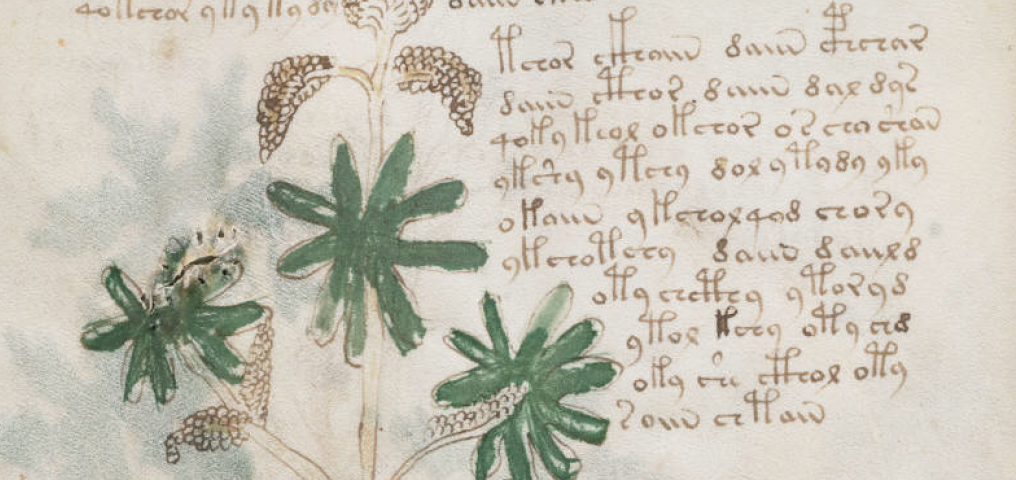
<f36v.5,+P1> <%>tchor.ckhoiin.daiin.cphchar
<f36v.6,+P1> daiin.cthor.daiin.dal.dys
<f36v.7,+P1> qoky.keol.okchor.os.cho.shan
<f36v.8,+P1> ykshy.ytchy.dol.ytydy.yky
<f36v.9,+P1> okaiin.ykcholqod.chory
<f36v.10,+P1> ykchotchy.daiin.daiild
<f36v.11,+P1> oty.chcthy.ytoryd
<f36v.12,+P1> ytol.kchy.oty.chd
<f36v.13,+P1> oky.she.cthol.oty
<f36v.14,+P1> soiin.chtain<$>
ANALYSIS RESULT
Line f36v.5 (L5)
[ORG] tchor.ckhoiin.daiin.cphchar
[ACA]
-
tchor = proof/touch-test/trial (endpoint test; instrument/means of proving)
-
ckhoiin = filtered and stabilized fraction (settled filtrate; ready for use)
-
daiin = fixed/settled state (D-family)
-
cphchar = containment vessel/container (CPH-family + “vessel”)
[FUN]
Perform the touch-test / endpoint trial on the already filtered and stabilized fraction. Then keep the contents in rest/fixed settling inside the process vessel, so the “endpoint” reading is reliable before the next step.
Line f36v.6 (L6)
[ORG] daiin.cthor.daiin.dal.dys
[ACA]
-
daiin = fixed/settled state
-
cthor = [VAR:CHTOR] piece/node/module tied to a junction or technical regime (graphic variant; not canonical as “CTHOR”)
-
daiin = fixed/settled state (reinforcement/second fixation)
-
dal = prepositional bridge “of/from” (contraction)
-
dys = plural bridge “of the / of those” ( there is classification noise in the lexicon; treat as a connector)
[FUN]
With the system in a settled state, treat the element CTHOR (variant of the core CHTOR) as an active point/module and fix the condition again (second confirmation of stasis). Then apply the governance “of/from … of the …” as an origin/belonging fit to bind the next block to what is defined here (without introducing new material through this connector).
Line f36v.7 (L7)
[ORG] qoky.keol.okchor.os.cho.shan
[ACA]
-
qoky = short genitive bridge + operational reinjection function (“return to the cycle / reinject into the flow,” depending on context)
-
keol = relational connector (“qui ’l” hyp.; syntactic fit)
-
okchor = [VAR:CHOKCHOR] cyclic mode / controlled repetition (variant without initial “CH”)
-
os = solid base (bone ash / adsorbent/alkaline support via calcination)
-
cho = bridge “with”
-
shan = scum/foam (surface fraction)
[FUN]
Reactivate the cycle via reinjection/operational return and fit the sequence with the relational connector. Execute in cyclic mode (controlled repetition) and apply OS (bone ash as a base/adsorbent) with focus on the surface scum: the target here is to treat/remove/stabilize the light top fraction before proceeding.
Line f36v.8 (L8)
[ORG] ykshy.ytchy.dol.ytydy.yky
[ACA]
-
ykshy = [COMP] Y + KSHY (“and then” + handle/adjust in continuous regime) — form not listed as a full token
-
ytchy = interface bridge (couple component to the next module)
-
dol = prepositional bridge “of/from” (articulated)
-
ytydy = sequential connector with governance (“following / starting from,” with embedded “di”)
-
yky = work/action focused on the target (directed execution; not diffuse)
[FUN]
Then handle/adjust continuously and couple the current module to the next via the interface bridge. Use the governance of/from and following / starting from to chain without ambiguity. Finally, execute the work with target focus (not on the whole batch): this is a precision step, not general mixing.
Line f36v.9 (L9)
[ORG] okaiin.ykcholqod.chory
[ACA]
-
okaiin = fixed/sealed state (-AIIN) in the central slot (closure/control stasis)
-
ykcholqod = strain/separate by quota/condition, in a chain (governed straining by measure; low CONF)
-
chory = [VAR/AMB] CHOR-family — may function as a cycle/repetition operator or collide with other nearby cores (record ambiguity)
[FUN]
With the contents fixed/sealed, perform quota/conditioned straining separation (measure the portion; do not do it “by eye”). Then execute the CHORY operator as the block-continuation mode—here it is treated as repetition/cycle control as a hypothesis, and it remains flagged for audit because the form “CHORY” is not canonically isolated in the lexicon.
Line f36v.10 (L10)
[ORG] ykchotchy.daiin.daiild
[ACA]
-
ykchotchy = [HYP] likely composition Y + KCHOTY + CHY
-
KCHOTY = local anchor (“at this point,” with opaque OTY)
-
CHY = target selector (“which/who” as a step parameter)
-
-
daiin = fixed/settled state
-
daiild = linking/form-control morpheme (DAII- origin fit with -D closure)
[FUN]
Then, at the indicated local point, explicitly select the target of the technical gesture (do not leave the target implicit). After that, keep the system in a settled state and apply the linking/closure morpheme (DAIILD) to “bind” the transition: this signals that the passage from one block to the next must occur with formal control, without losing traceability of the flow.
Line f36v.11 (L11)
[ORG] oty.chcthy.ytoryd
[ACA]
-
oty = [opaque LOCAL_ANCHOR] (no full entry; appears as a local reference in compounds)
-
chcthy = “what / that which” (demonstrative-relative bridge)
-
ytoryd = named material/reagent introduced into the flow (step payload; canonical patch)
[FUN]
At the active local slot (OTY), treat “that which” is in focus as the referenced item and introduce YTORYD as the step material. Mix/settle according to the chaining, without breaking the recipe order.
Line f36v.12 (L12)
[ORG] ytol.kchy.oty.chd
[ACA]
-
ytol = decant/pour off (transfer the fraction, separating clear from dregs without clouding)
-
kchy = locking key (directed closure at the indicated point)
-
oty = opaque local anchor (current slot)
-
chd = short technical imperative (“do / put / order”) (entry still has class noise; use as a short command)
[FUN]
Then decant/pour off the clear without clouding the bottom and without losing the useful fraction. Next, apply the directed lock at the apparatus point (OTY) and execute the short command (do/put/order) that closes the micro-step: priority here is transfer control + system locking.
Line f36v.13 (L13)
[ORG] oky.she.cthol.oty
[ACA]
-
oky = minimal deixis “here” (slot anchor; not geographic)
-
she = seal/solidify (closure control)
-
cthol = operational block/batch (substep aggregator)
-
oty = opaque local anchor (apparatus point)
[FUN]
Here, execute the sealing/solidification and treat the sequence as a single operational block (CTHOL) at the indicated point (OTY). In practice: close, stabilize, and keep the batch coherent—without breaking the block into out-of-order actions.
Line f36v.14 (L14)
[ORG] soiin.chtain
[ACA]
-
soiin = prepositional bridge “over / onto / on the” (masc. plural; destination/location fit)
-
chtain = technical module tied to cooking/heating (thermal regime)
[FUN]
Apply, over / onto the items in the active block, the CHTAIN module: that is, enter a controlled thermal regime (cook/heat) according to the procedure pattern—without reopening what has already been sealed unless an explicit operator commands it.
Procedural synthesis of the passage (reconstructed reading)
This block appears to describe a micro-sequence of endpoint control and clarification:
-
test the “endpoint” (touch-test) of the already filtered fraction,
-
settle/fix and bind junctions/modules via origin connectors,
-
return to the cycle under controlled repetition, handling the scum and using OS (bone ash) as a base/adsorbent,
-
adjust and couple modules with explicit governance,
-
strain/measure by quota (no “by eye” work),
-
select the target at the local point, fix it, and formally “bind” the transition,
-
introduce the named reagent (YTORYD),
-
decant/pour off + lock, seal, and move into the thermal regime.